

Chocolate University Online

"Unwrapping the Secrets of Chocolate"

CUO homeChocolate ClassesChocolate University Online StoreChocolate BlogChocolate InformationAbout CUOContact CUO
 

Subscribe to RSS Chocolate University Online Blog

avatarThe Different Types of Cacao Beans

By Joanna Maligaya on September 15, 2011 | Comments (0)

Just because there’s only one species of Theobroma cacao doesn’t mean there are no different types of cacao beans. However, even experts themselves can’t seem to agree on how many types of cacao beans there actually are, but let’s stick with 4.

Why in the world would you even care about this mumbo jumbo? Well, for starters, one word, flavor. While most of us are happily content with any chocolate in hand just as long as it’s good, true blue chocolate lovers take pleasure in the subtle differences in aroma, taste, and texture between the different cacao bean varieties.

The first type of cacao beans is the Criollo. It was initially cultivated by the Mesoamericans and is generally considered to be the most excellent worldwide. It has a rich, intricate aroma, and a profound yet smooth flavor. Criollo beans require just a little fermentation and short roasting to draw out the flavors.

The second of the types of cacao beans is the Forastero. It was originally domesticated in the Amazon basin and is very resilient and fruitful. However, it requires a long period of both fermentation and roasting for it to bring out its flavors. About 80% of all chocolate produced is derived from this particular variety but it has a bitter and plain flavor so it is usually mixed with Criollo and other chocolates to enhance its palatability.

The third one is the Trinitario variety which originated in Trinidad, where it derived its name from. Trinitario is a crossbreed of Criollo and Forastero which is why its being a separate type is arguable. These beans need medium-length fermentation to elicit the best flavors, but a short fermentation can already create acceptable ones and the roasting time can also be either short or medium. The flavor is virtually as complex as that of Criollo beans.

The last type, Nacional cacao, is extremely unusual and it is considered a Forastero so some people also refuse to consider it to be a feasible variety. It is mainly grown in western South America, particularly in Ecuador.

But whatever type it is, it’s still chocolate. And chocolate will always equal heaven, no argument there.

Categories: chocolate education,fun chocolate facts
Tags: , , , , , ,

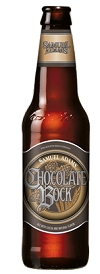
avatarSamuel Adams® Chocolate Bock

By Bryn Kirk on November 19, 2010 | Comments (0)

Hey, let’s talk about beer again.  A few months ago we had a guest author blog about chocolate AND beer.  This time we’ll talk about chocolate IN beer!
Many chocolate beer makers will use a type of malted barley called chocolate malt.  Chocolate malt is similar to other malts but cooked at even higher temperatures. This dark roast produces a more complex flavor with undertones of vanilla and caramel.  The color also becomes dark.

This year, the Samuel Adams® beer company introduces Chocolate Bock made with actual cacao!

They slowly aged the beer over a bed of roasted Ecuadoran cocoa nibs to capture flavors that include chocolaty, fruity, nutty, and earthy – flavors that are typical of an Ecuadoran origin bean.

The Chocolate Bock is advertised as “smooth, rich, and dark, with the robust flavor and creamy texture of chocolate.”

According to their website, http://www.samueladams.com/, Chocolate Bock would taste real good with a plate of braised short ribs. 

Ok. I’m in.

Categories: chocolate in the news
Tags: , , ,

avatarPinot Grigio Great with “Dark Milk”

By Bryn Kirk on September 25, 2010 | Comments (0)

Pinot Gris, or Pinot Grigio wine is light, crisp, and dry.  I make a point these days to pair chocolate with any wine I happen to be drinking.  Since I have never put any chocolate together with a Pinot Grigio before, I had to dig into my chocolate stash and pull out things I had on hand. 

My first choice was a mid-range dark, 60% cacao solids, sourced from Ghana.  I knew that the Pinot Grigio was on the dry side and I was curious to see if the fruity notes in the chocolate would complement the wine.

Oops.  Wrong!

To start, the chocolate actually had more coffee notes than fruity notes.  It was also too bitter for the wine.  At first, the flavor was tolerable but I could not distinguish any specific flavor notes, just a clashing of “stuff.”  At the end, the aftertaste was terrible (that, too, was indescribable which is probably ok since I didn’t want anymore anyway!).

Thank goodness my next choice was much better.  I chose a milk chocolate with an Ecuador cacao content of 42% – which really made it a “dark milk” chocolate.  I love that term; it isn’t very fancy but it is descriptive!  Many typical milk chocolates will have between 10% (the minimum according to U.S. FDA standards) and 20% chocolate. 

This time the flavors of the wine, predominately floral and fruity, matched up very well with the slightly floral and elevated fruity notes in the Ecuadorian without overpowering the wine.  The creamy and caramel notes tempered the bitterness of the chocolate so I avoided the previous disastrous aftertaste.

Now you know what to have with a Pinot Grigio, if you’re so inclined.  Enjoy!

Categories: chocolate pairings
Tags: , , ,

avatarChocolatier Hachez

By Bryn Kirk on August 16, 2010 | Comments (0)

In 1890 Joseph Emile Hachez, originally from Belgium, established the Bremer Hachez Chocolade Company in Bremen, Germany.

In 1922, they began producing what would become their signature product, a chocolate autumn leaf called Brown Leaves.


Brown Leaves comes in either solid milk or dark chocolate or praline leaves filled with fine nougat.  This traditional line of chocolates is only part of what they offer now.

I recently indulged in two varieties of Hachez chocolate, Cocoa d’Arriba Strawberry-Pepper and Edel Bitter-Sahne.

The Strawberry-Pepper is made with 77% cocoa from Ecuador and contains dried pieces of strawberry and spicy green peppercorns.

The strawberry flavor notes blend perfectly with the naturally fruity notes of Ecuadorian chocolate.  The heat from the peppercorns is pleasant at the back of the throat

According to the company website, www.hachez.de, Hachez uses predominantly South American cocoa varieties for its chocolate.

My next adventure was tasting the Edel Bitter-Sahne bar.  It is a creamy, dark-milk chocolate made with 43% cocoa.  The texture is soft (maybe too soft) and it melts fast.  The diary notes do not overpower the chocolate and by the end, the lingering blend of both flavors is satisfying.

Categories: chocolate review
Tags: , , , ,


Get Your FREE Ebook Now!

"101 Things You Must Know About Chocolate"

Name:
Email:

We will not share, rent, sell, or give away any information you ever provide us.  We will keep your email address secret.

Sponsored Links

Social Media

Recent Posts

Tags

Categories

Archives

Interesting Links