
In 2006, a nongovernmental organization in Japan started an annual chocolate-selling campaign to benefit and provide support to pediatric cancer patients and hospitals in Iraqi cities, including Baghdad, Basra and Erbil. This year, some of the proceeds will go to the children in Fukushima Prefecture, where the tsunami-crippled Fukushima Daiichi nuclear power plant is situated.
Minoru Kamata, chief of the Japan Iraq Medical Network, said: “We received many messages of support from Iraqi people (after the March 11 earthquake and tsunami) that made us determine to allocate part of the proceeds for Fukushima.” Kamata, a doctor and an author, has also shown his support for Belarus after the 1986 Chernobyl nuclear disaster by participating in medical programs. He also said that certain group members have played their parts in the removal of radiation in Fukushima Prefecture.
The Tokyo-based group is looking to sell 140,000 tins of chocolate, each priced at 500 yen, before Valentine’s Day. If they meet their objectives and generate profit with the total amount of 70 million yen, they plan on giving 7 million yen to Fukushima, 42 million yen to Iraq, and the remaining 21 million yen to pay the chocolate production, distribution, and other operating costs.
The group already started the latest campaign on December 1. They have already sold 102,000 tins of chocolate. According to Maki Sato, the secretary general of the group, the charity money for Fukushima will be used for activities such as traveling day care programs and measurement of food.
The packaging of the chocolates will feature the drawings of a 15-year-old girl who recovered from leukemia with the help of the group. Sato said: “We received a letter from an Iraqi girl saying she drew red flowers to show her support for Japan,”
You can show your support by buying the chocolates offered in the campaign. Go visit www.jim-net.net. OK, that’s a Japanese language website, so good luck with that! You can still get an overview of the organization on their English language page at www.jim-net.net/en.
If you happen to be in Tokyo between February 1 and 15, then head to Daitokai, a restaurant in Takadanobaba, in which an exhibition on child artists in Iraq and Fukushima will be held.
I know the holidays can be stressful and exhausting. Even if you aren’t in charge of preparing for the parties and family gatherings, you may find yourself having to do something unexpected that requires a tremendous amount of your time and energy.
One of two things usually happens to me in times of stress as it pertains to food; overeat or forget to eat. Neither extreme is healthy, and neither condition will do anything to keep a body going.
Here’s some good news… eating chocolate can help!
Chocolate increases your levels of serotonin, helping to boost your mood and energy level. It may also increase your ability to remember things because of naturally occurring epicatechin. Epicatechin helps to improve blood flow to the brain, which in turn improves focus and clarity.
Chocolate, along with other “brain food,” should be part of your survival snack kit.
Sprinkle chopped up chocolate pieces into yogurt. Yogurt helps prevent fatigue while boosting your get-up-and-go. Add some oatmeal, too, and get a complex carbohydrate which is ideal as a stable source of energy.
Need something to calm your nerves and lower stress? Combine chocolate with nuts like almonds and seeds such as sunflower. These can help lower blood pressure and balance mood. The omega fatty acids also play an important role in brain health.
I don’t know about you, but when it comes to my brain, I can use all the help I can get, and with chocolate as part of the prescription, it’s a big win!
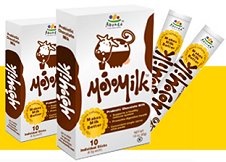
MojoMilk™ is a new product on the market and the first chocolate drink mix to incorporate probiotics.
Probiotics are living microorganisms consumed to promote digestive health and boost immunity.
MojoMilk is classified as functional food and comes in individual stick packs which can be poured into a glass of milk. It has less sugar than regular chocolate milk mixes and contains 10 times the active cultures found in probiotic yogurt.
The good bacteria in the cultures remain active both during the harsh manufacturing process and during digestion.
Chocolate milk has been criticized lately for being a contributor to child obesity and diabetes because of the higher sugar content than white milk. Many schools have banned chocolate milk this year.
This is how chocolate milk fights back! Go chocolate milk!
What is the difference between store bought chocolate and the high flavonol chocolate found in all those scientific studies?
The simple answer to this question is found in the question itself. Store bought chocolate typically has lower quantities of flavonol substances. OK, that’s a weak answer. Here is some explanation…
Stores offer a wide selection of chocolates and candy bars to meet the demand for variety. Most chocolate companies cater to the sweet tooth side of us and not the health nut side. The chocolate is not designed to deliver high content flavonoids and other beneficial components found in chocolate.
Some specialized chocolate companies do focus on the nutritional benefits of chocolate, and their chocolate products will contain higher contents of flavonoids to increase the impact of antioxidants. Many of these functional chocolates contain high levels of procyanidins and epicatechins due to a unique (and proprietary) processing of cacao beans.
Not all chocolate is created equal, not among grocery store brands, specialty chocolates, or nutritional/functional chocolates. Dark chocolate contains more cocoa solids than milk chocolate so that gives it more potential benefits.
Research indicates that normal chocolate manufacturing could destroy up to half of the naturally occurring flavonoids. This process has been studied and refined so that today some manufacturers have learned to make dark chocolate with a 95% retention of its flavonoids.
As attention remains on the potential health benefits of chocolate more manufacturers will follow suit so the benefits reach more consumers.
You know, on Fridays, I like to post something about a recent chocolate news story to help round out your overall chocolate experience.
So I ran across this interesting tidbit a couple days ago. Is it actually news or just silliness? You decide…
A French chocolatier made a strange creation out of chocolate – a real seaworthy chocolate boat. I think this redefines the definition of a “functional food.”
He did this to win a bet. I guess necessity is not always the mother of invention. You have got to check out the video of this chocolate vessel and its maiden voyage.
Don’t try this at home, kids. This was performed by a professional. A professional “what” I do not know, but a professional none-the-less. :)
Go ahead, click the FaceBook “like” button up above. It’s a fun story.
The 2009 U.S. chocolate market is considered “recession-resilient.” Chocolate sales increased 3% in 2009 over 2008. That translates into record sales of $17 billion!
Researchers predict that chocolate sales will continue to increase and could exceed $19 billion by 2014.
According to an article on www.marketwire.com, most of the 2009 growth comes from the 75% of Americans who, in spite of increases in chocolate prices, kept buying quality chocolate as an affordable treat.
The chocolate market in the U.S. is competitive, but companies that continue to offer products in the area of functional chocolate, use ingredients such as super fruits, or incorporate savory and exotic flavors will have an edge.
Trends like singe-origin chocolates and extra high cocoa content may be slowing down.
One quote from the Marketwire article really hit home with me. Don Montuori, publisher of Packaged Facts (a market research publication) says, “For many chocolate-loving Americans it’s more about the experience than it is about mere consumption…”
He put into words what I have been sensing for quite some time. The chocolate consumer wants to appreciate chocolate more and the market is filling up with people who are more chocolate savvy than ever before.
Chocolate for chocolate’s sake is just not cutting it anymore with consumers. Apparently we are demanding chocolate with more meaning, purpose, and benefit.
The general term for this type of chocolate is “functional chocolate.” Functional chocolates supply a nutritional benefit and chocolate is a good vehicle for transporting things like vitamins, probiotics, omega-3, and calcium.
In the last couple years, a few companies have introduced functional chocolates and one of them is Maramor Chocolates. You can find some of their products at Walgreen’s and GNC stores across the nation.
The Maramor website, explains that they started as a chocolate shop inside an Ohio restaurant in 1923. The shop made hand-crafted chocolates and sold them retail for years. Later the shop evolved into a large scale manufacturing facility.
Today, Maramor offers functional chocolates that include probiotic and omega-3 in both milk and dark chocolate. They recently added a calcium truffle.
According to a 2008 consumer survey, about 21 per cent of chocolate lovers are interested in chocolate that has added functional ingredients.
Watch out, though. Functional chocolate continues to be controversial when it comes to health claims and regulating standards.
First and foremost, I choose to eat chocolate because I enjoy the flavor, the aroma, and the luxury of something rich and decadent. But if I am going to snack on something, it might as well be chocolatey and nutritious.