
Chocolate University Online

"the chocolate destination...where learning and heaven unite"

CUO homeChocolate ClassesChocolate University Online StoreChocolate BlogChocolate InformationAbout CUOContact CUO
 

Subscribe to RSS Chocolate University Online Blog

brynTroubleshoot Chocolate Tempering

By Bryn Kirk on February 18, 2010 | Comments (0)

Recently I was asked about tempered chocolate that fails to keep a good shine and what can be done to fix that?  (See comments on how to temper chocolate page.)

That’s a really good question.  Concerns about the streaking and the lack of shine make me think about how temperatures, crystal development and the appearance of chocolate are all connected.

Properly tempered chocolate is shiny and uniform in color. When chocolate has streaks and does not shine, it indicates that at some point in the production process, the chocolate solidified without being in a properly tempered state.

I am sorry to have to get technical here, but see if you can follow this.  Cocoa butter has to solidify or form crystals within a narrow range of temperatures.  Tempering means all crystals become as identical in size and shape as possible and we can do this by controlling the temperatures.   

There are essentially 3 major stages in the making of chocolates that you have to be particularly careful to achieve the right temperature:

Stage 1 – The Starting Product

If you make your own chocolate candy center, like toffee or ganache, make sure it is absolutely at room temperature before you dip in chocolate.  If you don’t let it cool down enough, the heat will eventually push through your coating and cause it to lose its temper – either entirely or partially.  On the flip side, if you let the center get too cold, you essentially “shock” the chocolate.  This causes really BIG crystals to grow and the coating appears very dull, a flat finish.

If you mold your chocolates, use the molds at room temperature. This could be another source of unintended heat or cold introduced as the chocolate is solidifying.

Stage 2 – The Tempering Process

This is the most likely stage to produce streaking.

Agitating or stirring the chocolate during the tempering process is crucial to prevent streaking.  Imagine adding red food coloring to white frosting to make it pink.  If you stir in the coloring using only a few strokes, you will see streaks of red among the white. Continually stir and the frosting will eventually turn pink. Something similar happens when you temper chocolate without a thorough mixing.  Temperatures along the bottom and sides of the tempering pan will be several degrees different than its center.  Each temperature gradient grows different crystals at different rates.  This causes light to bounce and bend irregularly and we see alternating streaks of light and dark chocolate after it dries.

Too much stirring will cause air bubbles to form and get trapped within the coating.  Air bubbles cause crystals to form unevenly which gives the chocolate a grainy appearance on the surface.

If you use a tempering machine it may have separate milk, dark, and white chocolate settings.  If not, you’ll need to set up the temperature and mixing parameters differently for each type of chocolate that you use.  Milk chocolates temper at a lower temperature range than dark chocolates.  Milk chocolates are tricky because there are different percentages of milk in any given brand or formulation of milk chocolate coating. The higher amount of milk (milk fat), the lower the temperature.  White chocolates can be even more sensitive to temperature than milk chocolates. 

Stage 3 – The Cooling Process

This is the most likely stage to produce dull looking product with no shine.  The ideal temperature for cooling chocolate is between 65 and 68 F.  The relative humidity should be 50% or less.  I use a fan on a medium setting pointed right at my chocolates.  The fan will lift the humidity out of the air surrounding them.  Make sure the cooling tray is elevated off the counter top enough to let air circulate underneath and take away excess heat from the bottoms.  A refrigerator hovers around 40 F and a freezer around 30 F – these temps are too low to encourage a nice shine. Rooms that heat up during the summer spell disaster for chocolate.  Anything over 78 F is too warm and makes the chocolate soft and slightly sticky.

One obvious sign that the cooling process was unsuccessful is the formation of bloom.  Bloom is a gray dusty film that covers the surface of chocolate.  It can happen within hours, or days, after tempering and cooling.

To summarize, this particular tempering problem description appears to be a temperature issue at one of more stages of the process.

Categories: chocolate education
Tags: , , , , ,

brynAvoid Mistakes While Tempering Chocolate

By Bryn Kirk on November 12, 2009 | Comments (0)

As a follow-up to a few recent posts about tempering chocolate, I thought it might be useful to discuss some common mistakes you might make when tempering.

The most common mistakes I see are the lack of temperature control, lack of proper stirring, not choosing the right chocolate for the job, improper storage, and letting moisture contact the chocolate.

Let’s take a closer look at each of these situations…

Hot and Cold
Temperature control is really important when melting chocolate as well as tempering chocolate.  Chocolate can burn easily, so use a low temperature, take it slow, and stir often.  After the chocolate is melted, it is too hot to support good crystallization of the cocoa butter.  The chocolate must be cooled to the correct temperature depending on the type of chocolate being used (87˚ – 89˚ for dark and 85˚ – 87˚ for milk).  Improper temperatures keep the chocolate from hardening and it will remain wet and sticky instead of dry and glossy.

Working up a sweat
Stir, stir, and stir!  Constant stirring of the chocolate will force the crystals to form into the proper size and shape until solid.  It will also evenly distribute the temperature through out the whole mixture.  Lack of stirring means the chocolate will become discolored and dry with white streaks or dots.

Choosing the right chocolate
Using the wrong type of chocolate for your tempering project is bound to add frustration on top of disastrous results!  For example, don’t use chocolate chips for melting and dipping.  The viscosity, or “flow” property, of a chocolate chip is too thick to be useful for coating.  It would be like trying to cover a strawberry with pudding – not exactly the easiest way to do it. :)

Making it last
Chocolate has a long shelf-life, if stored correctly.  Chocolate should be stored in an air-tight container, away from strong odors, air temperature around 65˚ – 68˚ and a relative humidity of no more than 50%.

Water Phobia
Water and chocolate get along like cats and dogs.  If any moisture comes in contact with chocolate, you’ll know it right away – it turns into a grainy, sodden mess that it difficult to stir.  This mistake even has an impressive name: “seizing.”  If your chocolate seizes, throw it away and start over.  Seized chocolate will not melt or temper.

Avoid these problems and you’re well on your way to a good tempering experience!

Categories: chocolate education
Tags: , ,

brynHow to Temper Chocolate (Step 2 – Finish)

By Bryn Kirk on October 8, 2009 | Comments (4)

When you buy chocolate in the store, it is already tempered.  (At least it should be!)  Basically this means it is in a stable solid form at room temperature. 

If you want to get down to the business of eating the chocolate straight out of the package, no problem, just break off a chunk and go to it!  But, if you want to use the chocolate for any other purpose you may have to re-temper.

This is the final part in my series of tempering chocolate.  The first article was about the importance of tempering chocolate.  The last article was about melting the chocolate to get ready for tempering.

Now this post explains the actual tempering process. 

There are several methods of tempering but I prefer one method over the others – I prefer the SEED METHOD.

Solidifying chocolate is all about the crystals, and the secret to success depends on time and temperature.  The seed method is my favorite way to cheat in the process. :)

Seeding releases already stable crystals into melted chocolate, thus building upon existing structures that will begin the tempering process.  It is a faster method than starting from scratch, which attempts to create crystals where none exist. 

Here is the step by step process for tempering chocolate using the seed method.

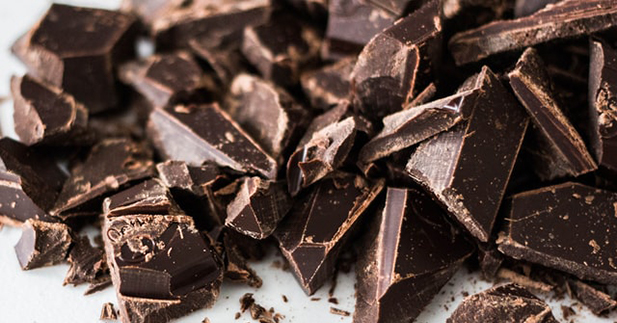
  1. Chop about 1 lb. of the chocolate into small pieces but set aside a chunk a little smaller than the size of the palm of your hand.
     
  2. Melt the chocolate by one of the methods presented in the melting the chocolate article.
     
  3. Remove the melted chocolate from the heat and drop in the saved chunk of chocolate.  Stir until the chocolate temperature drops to between 89° F to 91° F for dark chocolate or 87° to 89° F for milk chocolate.**Here is where arm strength and patience come in handy. The temperature will drop slowly, which is a necessary part of this process.  Stirring constantly will help distribute the growing crystals evenly throughout the mixture and form them into consistent sizes and shapes.
     
  4. Remove the remaining piece of solid chocolate (seed chocolate) if there is any left.  Set it aside.  (No, don’t eat it!  You still might need it.)
     
  5. Test the temper by smearing a small amount (say a teaspoon) of the chocolate on wax paper and allow it to cool for 5 to 10 minutes.  It should harden to be smooth, shiny, and dry to the touch.  If you see any dull areas, wet areas, or streaks in the hardened chocolate that indicates poor crystal development or lack of thorough mixing and stirring. If the results are not satisfactory, repeat the process by reheating the chocolate.  Use any leftover seed chocolate to begin again.

Assuming your test looks good, your chocolate is well tempered.

So now what?  What can you do with a bowl of tempered chocolate?  Yes, I know you’re thinking you can eat it.  But wait, you’ve gone through the hard work, let’s enhance something!

How about chocolate-dipped strawberries, or chocolate covered pretzels, or homemade chocolate candies.  Get the picture?  Once you’ve got a good temper you can coat anything.  Then let it harden at room temperature for a beautiful finish and great snap.

OK, stop drooling and start tempering!  You can comment below to tell me how it goes.

Categories: chocolate education
Tags: , , ,

brynHow to Temper Chocolate (Step 1 – Melt It)

By Bryn Kirk on September 14, 2009 | Comments (2)

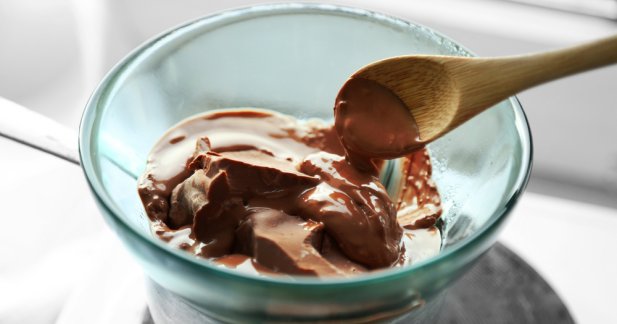
The first step in tempering chocolate is melting the chocolate.  Properly.

You might be thinking, what’s the big deal about melting chocolate?

Chocolate is a low melting point food.  It melts just below human body temperature.  While this low melting point means it’s easy to melt in the mouth, it also means it’s easy to burn when direct heat is used. Overheating chocolate will cause it to burn.  Burnt chocolate is irreversibly damaged and cannot be used.

In addition to burning, another potential problem when melting chocolate is “seizing”.  This can happen if you use an indirect heating method like a hot water and a double boiler. Small amounts of water will cause the chocolate to “seize” or become hard and crumbly.  Seized chocolate is irreversibly damaged and cannot be used.

There are several ways to melt chocolate effectively.

Microwave method

  1. Place a few chucks of chocolate in a microwave safe bowl.

  2. Heat the chocolate at 50% power for one minute.  Remove and stir. If chocolate is not melted, return to the microwave at 50% power for 30 seconds.  Remove and stir.

  3. Repeat every 30 seconds until chocolate is nearly melted. When small lumps remain, do not heat, but continue to stir until all is melted.  The key to melting is in the stirring.  Latent heat will continue to melt the chocolate while stirring.

The microwave method is the fastest way to melt chocolate but is also the easiest way to burn it if you are not careful.

Double boiler or bowl over hot water method

  1. Place small chucks of chocolate in the top pan of a double boiler over hot, but not boiling, water.  If the water is boiling, some may splash into the top pan and ruin the chocolate.
  2. If you don’t have a double boiler, then use a glass bowl or metal mixing bowl over a sauce pan filled ½ full with hot, but not boiling, water.
  3. Allow the chocolate to melt, stirring it occasionally.

This is a slower method, but there is very little risk of burning. Just be careful of the water!

Oven method

This method is really effective, especially if you want to melt a large amount of chocolate at one time or if you have to leave the chocolate in larger chunks. Your oven must heat evenly and be set to a very low temperature of 100°F.

  1. Place the amount of chocolate you want to melt into an oven safe bowl or pan.
  2. Let the chocolate melt at 100°F, stirring every 5 minutes until completely melted.

Of the three melting methods presented, this one takes the most time to melt.  A benefit though, once melted, the chocolate can be held at this temperature in the oven for the entire time you need to work with it.  There is little risk of burning and no water to splash.

In the next article in this series I’ll go over the “seed” method of tempering

Categories: chocolate education
Tags: , , ,

brynThe Importance of Tempering Chocolate

By Bryn Kirk on August 31, 2009 | Comments (1)

I admit my mind works differently than that of other chocolate lovers.  I am a scientist first, I guess, then a chocolate lover. 

One day I was attending a local street festival and happened upon a vendor selling “Fresh Pineapple – Chocolate Covered!”  Most people’s first reaction might be, “Yum!” but mine was more like, “Well, this is interesting.  It is either a chocolate disaster in the making (there’s too much moisture in most fresh fruit to support a tempered chocolate) or a major discovery!”

I guess I was picturing a wedge of pineapple (carefully wiped dry?) dipped in chocolate, similar to a chocolate-covered strawberry.  My curiosity was growing by the minute.

Well… the vendor put pineapple in a bowl and poured liquid chocolate on top.  You had to eat it with a spoon!

Cheater.

You see, chocolate must be tempered.  It is, in my opinion, the most important step when working with chocolate.

Tempered chocolate is solid at room temperature, has a smooth, shiny finish, and snaps when you break it.  Un-tempered or poorly tempered chocolate will melt too quickly in your hand, crumble or bend instead of snapping, and have a dull appearance or even “bloom” – which is that ugly gray film covering the surface.

Considering that description, which chocolate sounds more appealing to you?  Tempered or untempered?  Yeah, I thought so.

Tempering chocolate is not easy, but it is not difficult either.  Yes, there are ways to harden chocolate without tempering but trouble is right around the corner if you decide to take a short cut…

Freezing, or sticking chocolate into the refrigerator, instead of tempering is a solution that lasts about ten seconds (ok, maybe ten minutes, but you get my point).  You can’t break the chocolate rules without consequences, in this case condensation makes the untempered chocolate even worse.

To hold up best at room temperature, the cocoa butter in chocolate must crystallize from a liquid to a solid at the right temperature, in the right form, and in the right amount.  This is the tried and true principle behind tempering.

In an upcoming article I’ll explain the steps of tempering.

Categories: chocolate education
Tags: , , , ,


Get Your FREE Ebook Now!

"101 Things You Must Know About Chocolate"

Name:
Email:

We will not share, rent, sell, or give away any information you ever provide us.  We will keep your email address secret.

Recent Posts

Sponsored Links

Tags

Categories

Archives

Interesting Links