
fun chocolate facts
Chocolate Mousse Tidbits
January 12, 2012
For such a valued and delectable dessert, information about the origins of chocolate mousse is rather sparse.
The word "mousse" is a French word which means "foam" or "lather". A mousse is a certain type of food that incorporates air bubbles to give it an airy texture. Depending on how you prepare it, it can turn out light and fluffy or creamy and thick.
It made its way into the culinary world in the 18th century which was the period when chefs in Europe, especially in France, learned about the frothing power of eggs. A French writer Menon recorded the recipes which mostly involved different kinds of dishes from fish to vegetables. It didn't take too long until the infamous 19th century French painter and cook Henri de Toulouse came up with the idea of mixing in chocolate with mousse. He originally called it "chocolate mayonnaise", which we now know by the more appealing name "chocolate mousse".
Read more
The Cacao Tree
January 5, 2012
Probably by now, you know that chocolate is made from the fruit of the cacao tree. Let me share some tidbits about all you chocoholics' own version of "tree of life".
Cacao trees are tiny evergreen trees that are only about 6 meters tall. These trees produce fruit and flowers all year round and they are cultivated in countries within 10 degrees North and 10 degrees South of the Equator where the climate is most favorable for the cultivation of cacao trees as they require warm and humid environment. Furthermore, cacao trees need fertile and well-irrigated soil along with regular rainfall to grow their best.
Read more
Queens Of Chocolate
December 15, 2011
The queens of France were allegedly the ones held responsible for the craze of drinking chocolate during their times. They brought the practice along with them from their countries of origin, or so they say.
The first queen was Anne of Austria who married Louis XIII. When the king died, she became regent and declared her immense love of chocolate. She was even given a personal chocolatier!
The second queen who had extreme love of chocolate was Maria Theresa of Austria who married Louis XIV. It is said that she only had two passions in life... the king, and you guessed right, chocolate. And according to the king, chocolate tricks hunger but does not fill the stomach.
Read more
Chocolate Better Than Kissing?
December 8, 2011
Young couples volunteered to have their hearts and brains monitored and were then asked to melt dark chocolate in their mouths before kissing their partners.
The research was led by Dr David Lewis, formerly of the University of Sussex, and now of the Mind Lab. "These results really surprised and intrigued us," he said. "While we fully expected chocolate - especially dark chocolate - to increase heart rates due to the fact it contains some highly stimulating substances, both the length of the increase, together with the powerful effects it had on the mind, were something none of us had anticipated."
Read more
The Medicinal Use of Chocolate
December 1, 2011
Chocolate has a long history of use in treating several ailments such as reducing anemia, stopping the progress of diarrhea, relieving an overworked brain, and soothing an upset stomach.
It is commonly used in helping emaciated patients gain weight and stimulating the nervous systems of the physically weak by allegedly strengthening the lungs and energizing them. Yes, chocolate is that significant in traditional medicine.
Chocolate drinks with added coconut milk and onion were used in the Dominican Republic to lessen common cold symptoms. Sounds a bit odd, I know.
Read more
Giving Thanks
November 24, 2011
By the time American Pilgrims celebrated their first Thanksgiving, cacao was largely unknown outside of Meso-America. The unfortunate side-effect of this timing is that chocolate would not have been present at that original Thanksgiving dinner. 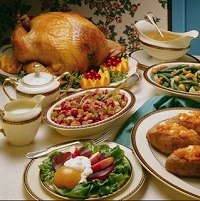 Therefore, it's not part of the American traditional Thanksgiving meal. 🙁
Well, I guess it doesn't really matter. In the grand scheme, today is a day to stop and give thanks for the many blessings we have received. Chocolate is still one of those blessings. And so are you!
Read more
The Dark Side of Chocolate History
November 17, 2011
Did you know that some centuries back, the Catholic Church used to associate chocolate with heretical behavior such as blasphemy and even witchcraft? Intriguing? I know.
Does the word 'Inquisition' ring your bell? If not, let me shed some light. The Inquisition, Inquisitio Haereticae Pravitatis (inquiry on heretical perversity), depicts religious overkill, torture, and intolerance. It was the fight against heresy by the Roman Catholic Church.
What certain behavior connects such disheartening event to chocolate, you may ask. Well, it was the act of drinking chocolate alone while attending an event. As morbid as it may sound, there were even stories wherein Charles II, King of Spain, drank chocolate while witnessing Inquisition victims being killed.
Read more
The Guardian of Chocolate?
November 10, 2011
If you already have gone through the previous blog posts, you may have learned that chocolate can trace its origins back to the Aztecs. They have associated cacao trees with the god of agriculture, Quetzalcoatl. Legend has it that Quetzalcoatl was held responsible for bringing cacao to earth. His actions were frowned upon so he got kicked out of the heavens for giving it to humans. As he escaped, he swore to return one day as a “fair-skinned bearded man” to save the earth.
The earliest Aztecs highly thought of the cacao plant. They considered it as a source of strength and wealth and Quetzalcoatl was said to be its guardian which explains why cacao beans were used as their form of currency.
The Aztecs were among the first ones to work with cacao beans. However, they initially didn’t use this for any culinary purpose whatsoever. They only developed interest in its edibility after observing certain animals, particularly monkeys. This is why only the pulp of the cacao tree was used at first, only after a while did they start utilizing the beans.
Read more
The History of Chocolate Chip Cookies
November 3, 2011
Homemade chocolate chip cookies almost always bring a smile to one’s face not only because of its pleasant taste but also because of how we grew up eating them.
What many people don't know is that, like the most renowned inventions, these treats were just accidentally created by Ruth Graves Wakefield back in 1933. Wakefield was the proprietor of the Toll House Inn, which was located on the outskirts of Whitman, Massachusetts. It was a famed place then to get some scrumptious home-cooked meals. Ruth's strategy to provide her patrons an additional serving of entrées for them to take home, along with her homemade cookies as dessert, made the inn all the more popular.
One day, Wakefield was preparing one of her favorite recipes, Butter Drop Do cookies. She commonly made the recipe using bakers’ chocolate, but she realized she had run out of it and only had Nestle semi sweet chocolate on hand. She then thought of utilizing it so she mixed it into the batter thinking it would melt and blend well. The chocolate pieces certainly did not mix like the bakers’ chocolate. Instead, it held its shape and softened to a creamy texture, and the rest is chocolate chip history.
Read more
White Chocolate Tidbits
October 27, 2011
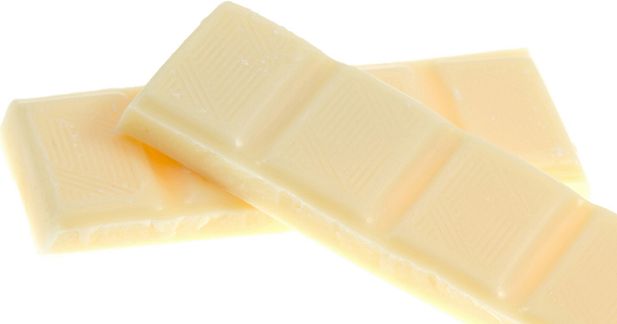
Despite being classified as 'chocolate,' white chocolate isn't truly chocolate. It may be a confectionary derivative of chocolate as it also comes from the same cacao plant, but its manufacturing process is rather different.
Its process for creation initially entails the drawing out of usable items from the cacao bean. Unlike the conventional chocolate that makes use of the cocoa powder ground from the seeds, the white version gets only the cocoa butter.
Even though the preparation of white chocolate has its similarities with dark and milk chocolate, it lacks cocoa paste, liquor, or powder. Thus, it does not contain the significant properties of chocolate such as thiamine, riboflavin, theobromine and phenylethylamine.
Read more