
Chocolate University Online

"Unwrapping the Secrets of Chocolate"

CUO homeChocolate ClassesChocolate University Online StoreChocolate BlogChocolate InformationAbout CUOContact CUO
 

Subscribe to RSS Chocolate University Online Blog

avatarThe Cacao Tree

By Joanna Maligaya on January 5, 2012 | Comments (1)

Probably by now, you know that chocolate is made from the fruit of the cacao tree. Let me share some tidbits about all you chocoholics’ own version of “tree of life”.

Cacao trees are tiny evergreen trees that are only about 6 meters tall. These trees produce fruit and flowers all year round and they are cultivated in countries within 10 degrees North and 10 degrees South of the Equator where the climate is most favorable for the cultivation of cacao trees as they require warm and humid environment. Furthermore, cacao trees need fertile and well-irrigated soil along with regular rainfall to grow their best.

Cacao trees are naturally found in rainforests where they make use of the shade of the heavy canopy, since they grow best when they are covered by some sort of shade. In the wild, these trees grow underneath the larger evergreen trees and are often found along rivers.

For the record, cacao has been grown for at least three millennia now in Mexico, Central America and South America. The leading suppliers of cacao are Côte d’Ivoire, Ghana, and Indonesia.

It takes around five years for a cacao tree to yield its first crop. It becomes an adult plant come year ten. It yields between 300 and 1000 pounds of cocoa per acre for approximately 50 years.

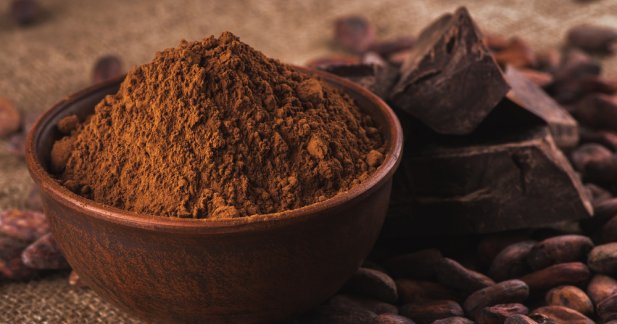
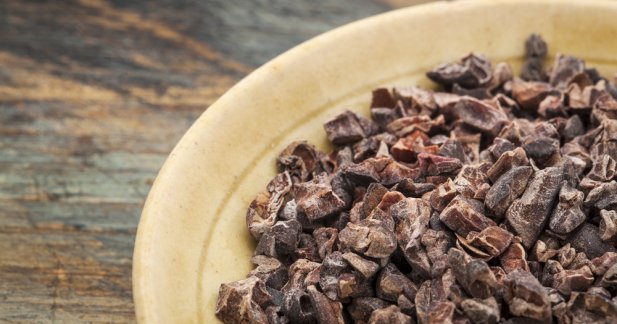
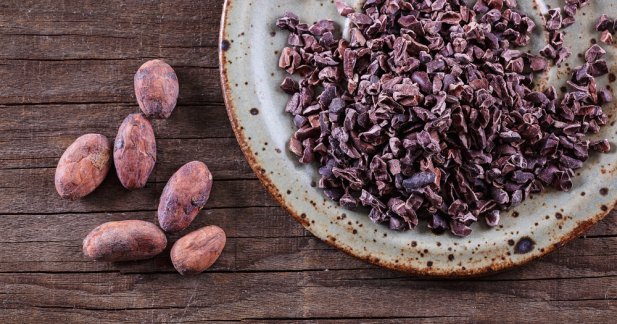
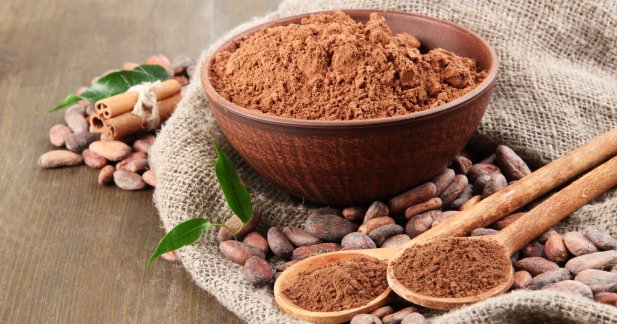
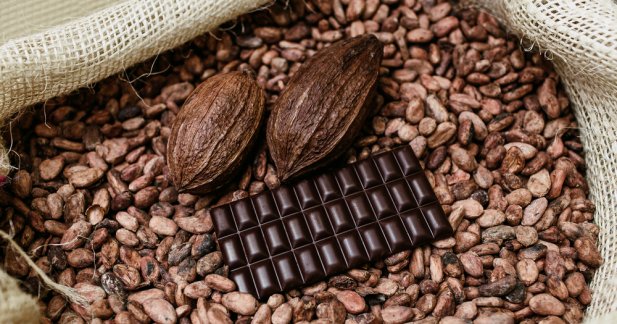
The seed pods grow directly off the trunk of the cacao tree, rather than the ends of the branches. Each pod is as large as a pineapple measuring 5 to 12 inches long and 3 to 5 inches wide and generally contains about thirty to fifty seeds. It takes about 400 to 500 seeds to produce one pound of chocolate. Cocoa beans, which are used in making chocolate, are the dried and fully fermented fatty seeds of the cacao tree.

Just so you know, cacao flowers are not pollinated by bees or butterflies like most flowers, but by forcipomyia midges which are like tiny flies. And just a fun fact, these midges have the fastest wing-beats of any creature on earth, about 1000 times per second!

Categories: fun chocolate facts
Tags: , , ,

avatarThe Guardian of Chocolate?

By Joanna Maligaya on November 10, 2011 | Comments (0)

If you already have gone through the previous blog posts, you may have learned that chocolate can trace its origins back to the Aztecs. They have associated cacao trees with the god of agriculture, Quetzalcoatl. Legend has it that Quetzalcoatl was held responsible for bringing cacao to earth. His actions were frowned upon so he got kicked out of the heavens for giving it to humans. As he escaped, he swore to return one day as a “fair-skinned bearded man” to save the earth.

The earliest Aztecs highly thought of the cacao plant. They considered it as a source of strength and wealth and Quetzalcoatl was said to be its guardian which explains why cacao beans were used as their form of currency.

The Aztecs were among the first ones to work with cacao beans. However, they initially didn’t use this for any culinary purpose whatsoever. They only developed interest in its edibility after observing certain animals, particularly monkeys. This is why only the pulp of the cacao tree was used at first, only after a while did they start utilizing the beans.

According to myths, since Quetzalcoatl left the Aztec empire, people have been waiting for his comeback. While at it, they gave offerings of cocoa beans and chocolate drink. Because of their high hopes, when they saw a ship heading towards their shores, they immediately thought it was Quetzalcoatl. The Europeans took this vulnerability as a chance to easily invade their lands, and were successful at it.

Chocolate’s history is indeed covered in legends and myths, not to mention depressing stories. It’s just amusing that chocolate is treasured so much that it has a guardian. Even I myself guard my box of chocolates with my life. Haha!

Categories: fun chocolate facts
Tags: , , ,

avatarThe Beginning of Chocolate

By Joanna Maligaya on August 25, 2011 | Comments (0)

Chocolate has been around for millennia now, and the history is extremely long and diverse. The earliest references of chocolate were over fifteen hundred years ago in the Central American Rain Forest, an ideal environment for the cultivation of the Cacao Tree because of the mix of high rain fall, temperature and humidity.

The Mayan culture worshiped the Cacao tree as they believed it was of divine origin and it symbolized life and fertility. Cacao is actually a Mayan word which meant “God Food”, modernly coined as “Food of the Gods”. The Mayans were believed to be brewing and drinking this spicy bittersweet beverage by roasting, grinding and fermenting the seeds of the Cacao Tree. This was intended for the wealthy and elite.

The Aztecs, like Mayans, also have their own version of the fermented drink and they called it Xocolatl, meaning “bitter water”. Their Emperor, Montezuma, allegedly believed that this was an aphrodisiac, and drank almost 50 cups a day. The beans were even used as currency and considered as treasure that when Spaniards came and searched for gold and silver, they found no more than the beans.

The Spanish explorer, Hernando Cortez, reputedly brought the beans to the Europeans who then improvised the drink by putting in sugar and vanilla so it became more pleasant to the palate. The English corrupted the name of such to Chocolate. The drink created a buzz and spread all throughout Europe and made it a staple in their royal courts.

Chocolate was merely a drink until a Dutch chemist named Johannes Van Houten tried to remove the bitter taste from the roasted ground beans to make the drink more palatable, but ended up with the cocoa solids. And the rest, as they say, is history. What would the world be without chocolate bars, candies, cakes, and stuff? Imagine that! I could not thank Van Houten enough for “accidentally” inventing the solid form of this precious thing. The liquid versions are good all their own, but I just can’t imagine life without the solid ones!

Chocolate is always fascinating. It makes it even more fascinating when you know that the confection you are enjoying at the moment has a very extensive yet interesting history.

Categories: fun chocolate facts
Tags: , , , , ,

avatarLost Cacao Rediscovered in Peru

By Bryn Kirk on December 30, 2010 | Comments (0)

A rare variety of cacao called Pure Nacional thought lost or extinct has been rediscovered in Peru.

Pure Nacional, once famous for its fruity and floral flavor notes, was wiped out by disease within a three year time period in Ecuador and Peru.  At least 95% of the cacao trees died out during that plague.

However, some unusual cacao trees growing pods containing white beans were discovered in a remote canyon in Peru’s Maranon Canyon.  Samples were sent to the United States Department of Agriculture for testing.  The USDA recently confirmed these were Pure Nacional variety of cacao.

The current international cacao database has 5,300 entries and none of these are Pure Nacional with white beans. This really is a rare discovery.

Turns out that the Maranon Canyon creates a unique climate for cacao and is the highest altitude known to grow cacao (between 3,500 and 4,100 feet).  All this helps produce a specially flavored bean which makes specially flavored chocolate.

The Maranon Chocolate will make its debut on January 11, 2011 at The Institute of Culinary Education in New York City.

Categories: chocolate in the news,fun chocolate facts
Tags: , ,

avatarMars Company Receives Award

By Bryn Kirk on December 21, 2010 | Comments (0)

The maker of the Snickers bar, Mars, supports the Sustainable Tree Crops Program in Africa.

The program is based on a partnership with the U.S. Agency for International Development (USAID) and the World Cocoa Foundation.  The organizations invest in cacao research and distribute cacao tree seedlings to farmers in order to grow more disease resistant and higher crop-yielding trees.

Mars works with farmers in the West African county of Ghana.  On December 17, Mars received the Secretary of State’s Award for Corporate Excellence for their support to these farmers.  Mars efforts are giving them a chance to go to school and learn about improving their cacao crops.

Mars’ goals are to provide sustainable farm practices to increase productivity while taking care of the environment.

It’s a win-win for everybody in that future generations will have a cocoa supply for many years to come.

Categories: chocolate in the news
Tags: , , ,

avatarCacao Grown in Fiji

By Bryn Kirk on November 23, 2010 | Comments (0)

There is small chocolate company revitalizing cacao and chocolate production in Fiji. 
 
Adi Chocolate Fiji, is located on the island of Vanua Levu.  They make chocolate using two crops grown on the island; Trinitario cacao beans and raw cane sugar.

The owners of the company fell in love with chocolate while running a restaurant and serving homemade chocolate ice cream.  In 2007, they began making dark chocolates from their native Fiji cacao.

The British brought Trinitario cacao beans to the islands in 1880, planting the original variety on Vanua Levu. For a while, cacao farmers in Fiji thrived but when other crops, like cassava and taro, became more profitable, cacao was abandoned.  The forgotten cacao trees are still there, but have been hidden among the overgrown rain forest.

Adi Chocolate Fiji has worked hard to restore cacao farming.  With a lot of back breaking hard work and the help of mother nature, cacao trees are coming back to life.

Processing chocolate has its challenges on the island.  Road conditions sometimes prevent getting the harvested cacao to market.  Heavy rains and hurricanes damage trees and cause mud slides, delaying the fermentation and drying stages.  Still, the farmers and Adi company manage to turn about 60 kg of beans into chocolate every 2 weeks.

Categories: chocolate in the news
Tags: , , ,

avatarCacao, a Product of Global Warming?

By Bryn Kirk on November 16, 2010 | Comments (0)

There is evidence of a past warming period in Earth’s history.  A previous spell of global warming, if you will.

Scientists at the Smithsonian Tropical Research Institute participated with other organizations in a research study to find out what effects global warming on our planet’s past vegetation – and by past, I mean the Paleocene Epoch!

Something really interesting caught my attention as I was reading a summary of the findings.  Contrary to the belief that tropical forests were devastated under the conditions of global warming, new plants evolved at a faster rate than ones that became extinct.  Pollen from the cacao plant family (and the passionflower plant family) appeared suddenly, for the first time, during this warming event.

Some computer models reveal a disastrous outcome for tropical rain forests from the greenhouse effects during a global warming scenario.  This new study predicts that a forest’s genetic diversity will increase as much as 50% and a wealth of new species will make their debut all because of the heat.

A copy of the research can be found at Science Magazine.  The title of the study is “Effects of Rapid Global Warming at the Paleocene-Eocene Boundary on Neotropical Vegetation”.  You can click that link for an abstract.

This is hot stuff!

Categories: chocolate in the news
Tags: , ,

avatarIndonesian Chocolate is Toad-ally OK

By Bryn Kirk on September 28, 2010 | Comments (0)

The Sulawesian toad (Ingerophrynus celebensis) has hero status on cocoa farms in Indonesia. 

German and Australian agriculture scientists have discovered the amphibian predator is eliminating a nasty pest to cocoa, the yellow crazy ant (Anoplolepis gracilipes).

The yellow crazy ants got their name from their color and their zigzag scurrying behavior.  They are a non-native, invasive insect that can bring devastation to cacao crops.  They nest in large supercolonies and have super appetites, too.

Up until now, it’s been the native ants role to help keep cacao protected from certain pests and diseases, but the yellow crazy ant has pushed out the native ant species and disrupted the delicate balance within the ecosystem. 

Here is where our super hero comes in.  Every three months or so, Sulawesian toads leave their home in the forest and march through the cacao plantations to breed in the water of near by rice fields.

As they come through the cacao farms, they feast on yellow crazy ants and researchers say they can deplete a crazy ant population by one third.  The toads prefer the invader ants over the indigenous ones.

Many farmers will be trained to encourage the use of toads as free pest-control agents all year round.

Go toads!

Categories: chocolate in the news
Tags: ,

avatarCacao DNA Revealed!

By Bryn Kirk on September 21, 2010 | Comments (0)

Here’s some chocolate trivia few people know since its only recently been discovered:  The cacao plant has about 35,000 genes.

I looked it up and humans have about 30,000 genes.  Umm, should I be concerned?

11 years ago, the Cacao Genome Database Project was founded to sequence the genome of Theobroma cacao.  3 years ahead of schedule, the genome sequence was released on September 15, 2010!

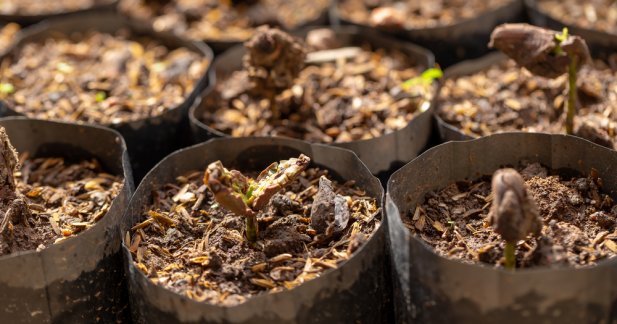
The goal of the genome project is to provide as much genetic information as possible and as fast as possible.  A cacao tree takes up to 5 years to mature and start producing.  It is more beneficial to the farmer to find out if the tree has any weaknesses, such as vulnerability to disease, at the seedling stage.

Mars Inc. (makers of M&M’s) funded the project.  They hope the information has a positive impact on cacao farmers by helping them stay in business longer and giving the world a more sustainable and stable chocolate supply.

Gotta go.  I have a genome sequence to explore.  Care to join me? http://www.cacaogenomedb.org/

Categories: chocolate in the news,fun chocolate facts
Tags: ,

avatarThe Spread of Cacao Around the World

By Bryn Kirk on July 29, 2010 | Comments (0)

I was recently asked about the spread of Cocoa or Cacao trees around the world.

Cacao is believed to have originated in South America.  There is a lot of evidence suggesting that the ancient Maya in Central America were the first to domesticate Theobroma cacao as a crop.

The Aztecs ground cacao into Xocoatl, a chocolate drink used mostly for spiritual and ceremonial rituals.

Hernan Cortés is credited with bringing cacao to Spain where it spread throughout Europe in the 1500’s and 1600’s.

Spanish friars began to grow cacao in Ecuador around 1635.  The French introduced cacao to Martinique and St Lucia, the Dominican Republic, and Brazil in the mid to late 1600’s.   England started growing it in Jamaica and the Dutch in Curaçao.  All of this effort just to meet the ever growing demand for the affluent in Europe.

When demand exploded again in the 1800’s even more had to be cultivated.  Cacao from Brazil was taken to Principe and Sao Tomé, islands off the coast of West Africa around 1830.  From there, it spread to Nigeria and Ghana.

Today, the largest cacao producing country is Ivory Coast, Africa.

Categories: chocolate education,fun chocolate facts
Tags: , , ,
Older Posts »


Get Your FREE Ebook Now!

"101 Things You Must Know About Chocolate"

Name:
Email:

We will not share, rent, sell, or give away any information you ever provide us.  We will keep your email address secret.

Sponsored Links

Social Media

Recent Posts

Tags

Categories

Archives

Interesting Links