
Chocolate University Online

"Unwrapping the Secrets of Chocolate"

CUO homeChocolate ClassesChocolate University Online StoreChocolate BlogChocolate InformationAbout CUOContact CUO
 

Subscribe to RSS Chocolate University Online Blog

avatarCouverture Chocolate

By Joanna Maligaya on January 19, 2012 | Comments (0)

It’s hard to resist chocolates, no argument there. What if they’re made with more cocoa butter than the regular ones? How mouth-watering could that get?

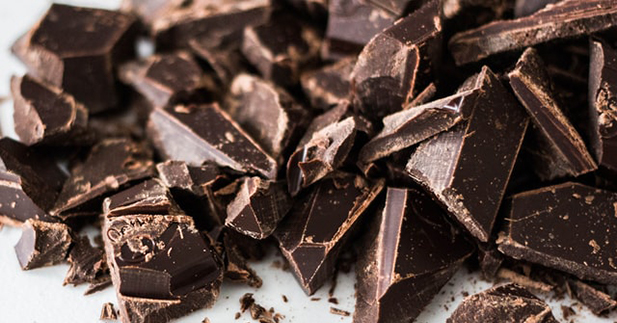
Couverture chocolate is a special form of high-class chocolate used by chocolate companies and chocolatiers.  It has a way richer and creamier consistency as compared to regular chocolate due to the fact that it contains a higher amount of cocoa butter. And with the right tempering, you get a more polished and glossier chocolate with a crisper “snap” when broken. It’s perfect for coating, molding, garnishing and dipping.

Not more than 100 firms worldwide manufacture couverture chocolate. Some of them create exclusively for their own private usage, while others market to other chocolatiers who don’t possess enough capacity to make their own couverture.

Couverture chocolate outstands the regular chocolate by its unique properties. One of which is its quality. Couverture chocolate specialized chocolate gets help from chocolate scouts who go on a hunt for the best cacao beans in the world, and meticulous research is being done in order to come up with the perfect bean blend for that very distinct flavor profile.

In order to be considered couverture, the chocolate should contain 32 to 39% of cocoa butter and the overall percentage of the cocoa butter together with the cocoa solids must reach at least 54%.

Never get couverture chocolate confused with confectionery chocolate or compound chocolate as these contain much less cocoa butter, if any. In addition to that, they may also have vegetable/coconut/palm oil, hydrogenated fats, and even artificial chocolate flavoring in them.

Couverture chocolate is normally not blended in with any other ingredients due to its high price and quality.  It is meant to stand out on its own as an ingredient. It is perfect for chocolate fountains, the cocoa butter acts as a lubricant to prevent the chocolate from getting stickier than it should.

When you plan on trying it out for taste, you can order samples from certain companies to get the flavor profile you personally like since couverture chocolates have varying tastes depending on the source of the beans and the process they undergo.

Categories: fun chocolate facts
Tags: , , , , ,

avatarChocolate Campaign to Benefit Fukushima Kids

By Joanna Maligaya on January 13, 2012 | Comments (0)

In 2006, a nongovernmental organization in Japan started an annual chocolate-selling campaign to benefit and provide support to pediatric cancer patients and hospitals in Iraqi cities, including Baghdad, Basra and Erbil. This year, some of the proceeds will go to the children in Fukushima Prefecture, where the tsunami-crippled Fukushima Daiichi nuclear power plant is situated.

Minoru Kamata, chief of the Japan Iraq Medical Network, said: “We received many messages of support from Iraqi people (after the March 11 earthquake and tsunami) that made us determine to allocate part of the proceeds for Fukushima.” Kamata, a doctor and an author, has also shown his support for Belarus after the 1986 Chernobyl nuclear disaster by participating in medical programs. He also said that certain group members have played their parts in the removal of radiation in Fukushima Prefecture.

The Tokyo-based group is looking to sell 140,000 tins of chocolate, each priced at 500 yen, before Valentine’s Day. If they meet their objectives and generate profit with the total amount of 70 million yen, they plan on giving 7 million yen to Fukushima, 42 million yen to Iraq, and the remaining 21 million yen to pay the chocolate production, distribution, and other operating costs.

The group already started the latest campaign on December 1.  They have already sold 102,000 tins of chocolate. According to Maki Sato, the secretary general of the group, the charity money for Fukushima will be used for activities such as traveling day care programs and measurement of food.

The packaging of the chocolates will feature the drawings of a 15-year-old girl who recovered from leukemia with the help of the group. Sato said: “We received a letter from an Iraqi girl saying she drew red flowers to show her support for Japan,”

You can show your support by buying the chocolates offered in the campaign. Go visit www.jim-net.net.  OK, that’s a Japanese language website, so good luck with that!  You can still get an overview of the organization on their English language page at www.jim-net.net/en.

If you happen to be in Tokyo between February 1 and 15, then head to Daitokai, a restaurant in Takadanobaba, in which an exhibition on child artists in Iraq and Fukushima will be held.

Categories: chocolate in the news
Tags: , , , ,

avatarFestival of Chocolate

By Joanna Maligaya on January 10, 2012 | Comments (0)

The Festival of Chocolate, Florida’s only all-chocolate event and the grandest celebration of everything chocolate in the Southeastern United States, will be taking place on January 14-16, 2012 at the Museum of Science and Industry (MOSI).

Local and regional chocolate and confection companies will be featuring and selling treats such from truffles and cupcakes to ice cream and chocolate drinks.

Guests and patrons can also participate in fun chocolate competitions conducted for the young and the young-at-heart. Go nuts in piling a skyscraper of cookies or in their signature “Face the Cookie” contest.

If you’re a chocolate geek, eat your heart out as you learn about the history of chocolate and the process it undergoes from tree to treat.  Fulfill your fantasies about becoming a detective in a hunt where you’re supposed to uncover fun chocolate facts in the Chocolate Museum.

Chocoholics of all ages will surely have fun creating chocolate lip balm and armpit fudge. Get to witness models in “Yum-way” as they strut their stuff made out of candy bar wrappers. The tasteful (pun intended) and artsy creations will be displayed at 2:30pm on Saturday, January 14.

Renowned pastry chefs and chocolate makers will be sharing some chocolate treat creation tips.  You can do this at home whether you are a chef looking to master your skills in working with chocolate, or a die-hard chocolate fanatic on the lookout for new, creative, and interesting chocolate treat recipes to whip up for yourself or for people in your life. Also, you’ll get to see these experts in the flesh and live in action as they compete with another.

As you may have seen in previous blog posts, wine and chocolate pairing is becoming all the rage. We know for a fact that chocolate per se is a pleasure, and so is wine. Get down to details to know how to match these two properly as you take part in interactive classes hosted by a professional wine and a chocolate expert.

Head to Tampa, Florida, to experience the Festival of Chocolate and have the sweetest three days of your life!

Time: January 14, 2012 at 9am to January 16, 2012 at 5pm
Location:
Museum of Science And Industry
4801 E. Fowler Avenue
Tampa, Florida 33617
http://tampa.festivalofchocolate.com/

Categories: chocolate in the news
Tags: , , , , , ,

avatarFrom Bean To Bar

By Joanna Maligaya on September 27, 2011 | Comments (0)

While in search of nature’s medicines, the Medicine Hunter named Chris Kilham is famous for his venture which entails trying out peculiar food, but the most recent one made him lean towards the “sweeter” side.

Just recently, Kilham took a trip to Mast Brothers Chocolate in Brooklyn, N.Y. to witness the behind-the-scenes in chocolate making.

Time and again, research has revealed that chocolate is in point of fact beneficial for you, health-wise. The benefits involve protecting the heart and mind, even sex drive.

In 2007, brothers Mike and Rick Mast started manufacturing organic chocolate made from some of the best cocoa beans worldwide, and they make approximately 5,000 bars every week .

Rick Mast said: “We’ve got beans from Madagascar, beans from Peru… basically our criteria is simple: We only source from the best, so we search the world over for the best cocoa beans,”

No bad beans are allowed in chocolate making, as Kilham found out. Thus, the beans are hand-sorted one-by-one before roasting.

“We’re not just making sure that we’re getting rid of any flat beans, any beans that are misshapen or are just not up to our standards, and we’re screening them before we begin to roast,” Mike Mast said.

The beans are cautiously distributed on a tray in order for them to be roasted evenly before they’re placed into a convection oven set around 300°F. This process facilitates separation of the bean from the husk, eliciting the rich, chocolaty goodness.

“We wait nine minutes. At that time, we’ll take the tray out, shake it, flip it, and put it back in – and the first step will be done,” Rick Mast added.

The next step involves a machine called a ‘cracker’ wherein the beans are poured, and they are separated from the husks leaving only the cocoa nibs which are used to make chocolate. The leftover husks are then donated to local farmers which they use for compost.

Next, the nubs are put under the stone grinders, where they are settled in one to three days. A cocoa bean consists of about 54 percent cocoa butter and the only other ingredient added during the grinding process is organic cane sugar.

After grinding, the chocolate is strained and sits for 30 days to age. Tempering is what gives chocolate its shiny look. According to Mike Mast, that’s the time the molds are put in and let set in the refrigerator for 15 to 20 minutes.

I myself would go out on a limb and try out bizarre anything if it will lead me to this kind of sweet adventure!

Categories: chocolate education,chocolate in the news
Tags: , , , ,

avatarThe Different Types of Cacao Beans

By Joanna Maligaya on September 15, 2011 | Comments (0)

Just because there’s only one species of Theobroma cacao doesn’t mean there are no different types of cacao beans. However, even experts themselves can’t seem to agree on how many types of cacao beans there actually are, but let’s stick with 4.

Why in the world would you even care about this mumbo jumbo? Well, for starters, one word, flavor. While most of us are happily content with any chocolate in hand just as long as it’s good, true blue chocolate lovers take pleasure in the subtle differences in aroma, taste, and texture between the different cacao bean varieties.

The first type of cacao beans is the Criollo. It was initially cultivated by the Mesoamericans and is generally considered to be the most excellent worldwide. It has a rich, intricate aroma, and a profound yet smooth flavor. Criollo beans require just a little fermentation and short roasting to draw out the flavors.

The second of the types of cacao beans is the Forastero. It was originally domesticated in the Amazon basin and is very resilient and fruitful. However, it requires a long period of both fermentation and roasting for it to bring out its flavors. About 80% of all chocolate produced is derived from this particular variety but it has a bitter and plain flavor so it is usually mixed with Criollo and other chocolates to enhance its palatability.

The third one is the Trinitario variety which originated in Trinidad, where it derived its name from. Trinitario is a crossbreed of Criollo and Forastero which is why its being a separate type is arguable. These beans need medium-length fermentation to elicit the best flavors, but a short fermentation can already create acceptable ones and the roasting time can also be either short or medium. The flavor is virtually as complex as that of Criollo beans.

The last type, Nacional cacao, is extremely unusual and it is considered a Forastero so some people also refuse to consider it to be a feasible variety. It is mainly grown in western South America, particularly in Ecuador.

But whatever type it is, it’s still chocolate. And chocolate will always equal heaven, no argument there.

Categories: chocolate education,fun chocolate facts
Tags: , , , , , ,

avatarChocolate and Cocoa Substitutes

By Bryn Kirk on January 28, 2011 | Comments (0)

Have you ever discovered you were out of an ingredient?  Of course that always seems to happen right in the middle of making something!

When the recipe calls for chocolate, cocoa powder, or unsweetened baking chocolate, using the correct substitution can mean your crisis is avoided.  And no emergency trip to the grocery store!

Here is a list of worthy substitutions when working with certain chocolate ingredients in a recipe:

Recipe Calls For
 
Substitute 
 
1 oz. Bittersweet or Semi-Sweet Chocolate ½ oz. unsweetened baking chocolate 
+ 1 tbsp white sugar
 
1 oz. Milk Chocolate 1 oz. semi-sweet chocolate
+ 1 tbsp white sugar
 
OR
 
1 oz. sweet chocolate
 
1 oz. Baking Chocolate (Unsweetened) 3 tbsp natural cocoa powder
+ 1 tbsp melted butter or vegetable oil
 
3 tbsp Dutch-Processed Cocoa Powder 3 tbsp natural cocoa powder
+ 1/8 tsp. baking soda
 
OR
 
1 oz. unsweetened baking chocolate
+ 1/8 tsp. baking soda and reduce other fat by 1 tbsp
 
3 tbsp Natural Processed Cocoa Powder 3 tbsp Dutch-processed cocoa powder
+ 1/8 tsp. cream of tartar, lemon juice, or vinegar
 
OR
 
1 oz. unsweetened baking chocolate
and reduce other fat by 1 tbsp

Categories: chocolate education,chocolate Q&A,chocolate recipes
Tags: , , , , ,

avatarWorking With Chocolate and Caramel Filling

By Bryn Kirk on August 8, 2010 | Comments (0)

One of my email subscribers was wondering how chocolate candies made with high water content fillings, like caramel, can seemingly withstand blooming or other adverse effects?

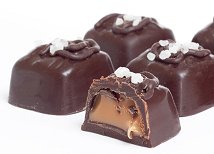
It is true that even the smallest amount of water and chocolate don’t get along.  The combination often leads to problems like seizing and sugar bloom.  Yet, you can buy chocolate-covered caramels and see for yourself that they look good and tastes good.  They have a fairly decent shelf life, too.

So what is the secret for getting this to work?

Let me say, first of all, that it isn’t so much a secret as it is strategy.  It is a timing game.  How long can we keep nature’s forces at bay because eventually the issues between a high water content filling and the chocolate coating will come to life. 

Tip #1 – Find the right caramel formula.  During the caramel making process, boiling the ingredients will allow most of the water to evaporate and the remaining water should be trapped among the sugar solids.  But this behavior depends on the right recipe.  Finding the right formulation will take experimentation and practice.

Tip #2 – Wrap a thick coating of chocolate around the filling to slow down the migration of any water or liquid fat from reaching the surface.  You’ll know pretty quickly if the coating is not thick enough because bloom will appear early and the shelf life will be shorter than expected. 

Tip #3 – Store and package the final product correctly to prolong the arrival of bloom.  It is optimal to store at a room temperature of 70F and 50% relative humidity.

Categories: chocolate education,chocolate Q&A
Tags: , , ,

avatarOrange Zest Seized My Chocolate

By Bryn Kirk on July 22, 2010 | Comments (0)

Recently, I was asked this question:  “I love the taste of chocolate and orange but when I add orange zest to my coating it curdles.  Why?”

This presents an excellent technical lesson in working with chocolate.

The issue is moisture.

“Curdle” is not the correct term, but I think the idea is clear – chocolate will not function properly if moisture is introduced.  Even the tiniest drop of water is problematic.  When water and chocolate mix, it will “seize.”

Fresh fruit, including the peel of an orange, is moist and adding it to a chocolate coating spells disaster.  For this reason, chocolate candy bars use dried fruit, candied fruit, or an oil based flavoring.

You can cheat a little (and get away with it) by adding a fruit zest or juice to a ganache and then enrobing the ganache in chocolate.  If the candy is eaten within a few days, the moisture captured in the creamy center should not be a problem.  Truffles tolerate this process the best.  Don’t add the moisture to the coating.  Instead, add it to the candy center.

Another common problem arises when dipping fresh strawberries in chocolate.  Make sure you dry the outer skin completely before covering in chocolate.  This will buy you some time before the moisture makes it way through the fruit and to the surface of the chocolate coating.  When this happens, the moisture will destroy the appearance (with bloom) and texture (making it bumpy or grainy) of the surrounding chocolate.

Categories: chocolate education
Tags: , ,

avatarHints for Molding Chocolate

By Bryn Kirk on May 10, 2010 | Comments (0)

This is the second part of the series.  If you missed the first part, or you’d like a review, please see Tips for Molding Chocolate.

Now that you’re caught up, here are my Extra Special Helpful Hints when working with chocolate molds.

  1. Cool at room temperature…
    I do not recommend using either a refrigerator or freezer to cool the pieces.  These cool the chocolate too fast and they are too cold for crystals to form properly on the surface of the chocolate.  Colder chocolate will not be as shiny as chocolate cooled at room temperature.
     
  2. Place the chocolate in front of a fan while cooling…
    This will remove the heat quickly and reduce the surrounding humidity to promote the best gloss, set, and snap.  (Be careful not to operate the fan at too high a speed.  You don’t want to blow debris onto the chocolate.)
     
  3. Invert a cookie sheet or use a wire rack for cooling…
    This will allow heat to disperse evenly from all sides.  This is particularly important if you are using a flat mold.  The design or shape of the mold is face down as you pour and cool the chocolate.  It is common to have chocolate stick to the face of the mold if it remains flat against the counter or table while cooling. The trapped heat melts the surface crystals and sends the chocolate out of temper.
     
  4. Use a mold at room temperature…
    Do not cool the mold or heat the mold at any time during the process.  Warm molds can soften the surface of the chocolate as it cools.  This promotes Fat Bloom that can appear quickly or as late as 24 hours later.  Cold molds can shock the surface crystals and make a dull looking chocolate piece.
     
  5. Do not coat the inside of the mold with oil or fat or a “releasing agent”…
    Sure, adding a coating inside the mold sounds like a really good idea.  But, these products will interfere with the temper of the chocolate.  So while it might make it easier to remove your chocolate you would sacrifice shine and your nice temper in the process.
     
  6. Clean the mold with hot water, NO soap, and dry really, really well…
    Soap can leave a layer of residue that will interfere with crystallization.  A moist mold can cause the chocolate to seize and turn into a hard, crumbly mess.
     
  7. Avoid condensation…
    Condensation happens when chocolate is removed from a cold environment and begins to warm up to room temperature.  Little droplets of moisture will form on the surface of the chocolate as its temperature rises.  The moisture will dissolve a small amount of sugar from the chocolate’s surface.  After the water droplets evaporate, the sugar that is left behind forms a thin dusting of white powder on the chocolate. This is called Sugar Bloom.

There you have it.  Keep these hints in mind and  your molding success rate will go way up!

Categories: chocolate education
Tags: , ,

avatarTips for Molding Chocolate

By Bryn Kirk on April 29, 2010 | Comments (1)

Molded Chocolate (not to be confused with moldy chocolate!), or chocolate from molds (moulds),  has been around for a long time. 

Most chocolate molds are made of either metal or plastic. They can be flat, to shape chocolate like a candy bar, or three dimensional, to shape like an Easter bunny.

If you are a beginner at working with chocolate, start with a flat plastic mold with small cavities of simple shapes.  You can buy these at craft stores or baking/candy supply stores or online at a number of candy-making supply websites.

Here are some tips for molding chocolate…

  1. Temper your chocolate.  (If you need a refresher on tempering, please refer to my earlier chocolate tempering blog post.)
     
  2. Pour the tempered chocolate into the mold using a tablespoon or pastry bag to fill the cavities.  Fill slightly over the rim.  Don’t worry about spilling a little over the top.  After the mold is filled, gently tap it to level the chocolate at the top.  Carefully drop the mold on the counter or table several times.  This will remove air bubbles that are trapped in the chocolate.
     
  3. Scrape excess chocolate off using a spatula.  Sometimes I use a clean plastic ruler (the same kind children use in school) as a straight edge to remove the excess chocolate.
     
  4. It is best to cool your chocolate at 65-70° F in a room with good air
    circulation and low relative humidity (50% or less).
     
  5. Release the chocolate from the mold.  The chocolate will contract or pull away from the edges when it is ready to be popped out.  Reverse the mold over a flat, clean surface and press firmly on the sides of the mold with your fingers or tap lightly on the counter.  The chocolates should just fall out.  If they don’t, let the mold cool for a few more minutes and try again.

Coming soon, I’ll provide you with some extra helpful tips when working with molded chocolates…

Categories: chocolate education
Tags: , ,
Older Posts »


Get Your FREE Ebook Now!

"101 Things You Must Know About Chocolate"

Name:
Email:

We will not share, rent, sell, or give away any information you ever provide us.  We will keep your email address secret.

Sponsored Links

Social Media

Recent Posts

Tags

Categories

Archives

Interesting Links