
chocolate education
The Secret (and Science) of Ice Cream Coatings
September 2, 2010
There are two basic types of chocolate ice cream coatings, “real” chocolate coatings and chocolate flavored compound or confectionery coatings.
Both types of coatings must be thin enough to cover and bend over the ice cream, thick enough not to crack open and let the ice cream seep through, and simultaneously be crunchy and melt in your mouth. That’s not asking too much, is it?
Most of these demands have to be met by the fat system used in the coating.
Read more
Fermenting Cocoa Beans
August 26, 2010
Did you know that one the most important steps in making chocolate taste like chocolate is cocoa bean fermentation?
Cocoa beans grow inside a thick-walled pod surrounded by a sugary pulp that provides nutrients to the beans (seeds). The pulp is made up of about 12% sucrose which gets broken down by microbes, mostly yeasts.
During the harvest, pods are cut down from the tree, opened, and the cocoa beans scooped out by hand. Large mounds or heaps of pulp and beans are built in order to start the fermentation process. To speed things along, big leaves (like banana) are used to cover the heaps in order to seal in the heat generated by the microbial action.
The temperature can reach 40C to 50C in the fermentation heap. Many chemical reactions take place, and it is here during fermentation that chocolate acquires its color and flavor.
Read more
Lecithin in Chocolate
August 22, 2010
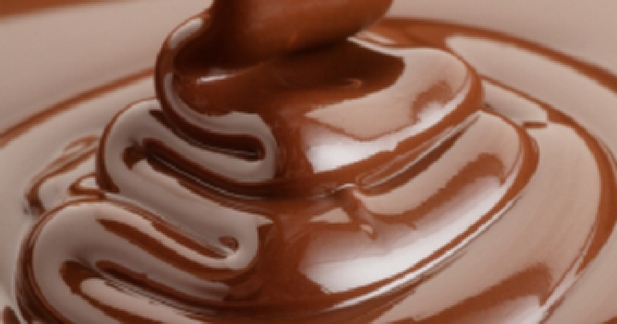
Take a look at an ingredient label on a bar of chocolate. 9 times out of 10 you will see soy lecithin listed there.
Is using lecithin as an ingredient in chocolate important, and what is the benefit of using it?
Look! It’s a Bean to Bar Chocolate
August 19, 2010
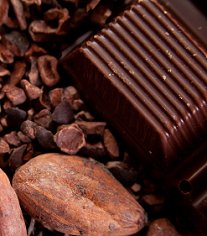 Every now and again you will come across an article, a chocolate bar, or a chocolate company that will draw attention to Bean To Bar processing.
Bean to bar means quite literally that the product was manufactured from the roasting and grinding of the bean to the tempering and packaging of the chocolate.
Read more
How Much Caffeine is in Chocolate?
August 15, 2010
I can’t talk about caffeine without mentioning another similar chemical called theobromine. So, I’ll discuss both and even compare some things between them.
There are two chemicals present in chocolate that qualify as stimulants (alkaloid molecules known as methylxanthines), caffeine and theobromine. Theobromine affects people in a similar way to caffeine but is much weaker. Although there is significantly more theobromine in chocolate than caffeine, it triggers these “caffeine affects” on a much smaller scale.
Read more
Working With Chocolate and Caramel Filling
August 8, 2010
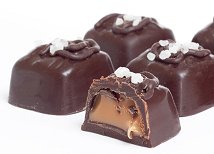 One of my email subscribers was wondering how chocolate candies made with high water content fillings, like caramel, can seemingly withstand blooming or other adverse effects?
It is true that even the smallest amount of water and chocolate don’t get along. The combination often leads to problems like seizing and sugar bloom. Yet, you can buy chocolate-covered caramels and see for yourself that they look good and tastes good. They have a fairly decent shelf life, too.
Read more
Categories of Cocoa Beans
August 5, 2010
The chocolate world divides cocoa beans into two general categories: Flavor Beans (varieties Criollo or Trinitario) and Bulk Beans (variety Forestero).
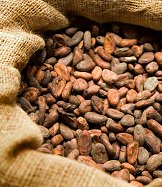 There are some exceptions to this system, but general speaking this is how the cocoa market categorizes cocoa beans.
The percentage of flavor beans in the total world production of cocoa beans is only around 5% per year. Virtually all the cocoa harvested is classified as bulk cocoa.
Read more
Chocolate and Beer Pairing – Pale Ales
August 1, 2010
In the opening post of this series I mentioned that there are three categories of beer that pair well with chocolates.
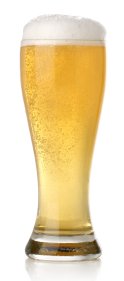 The third group of beers include pale, bitter beers, such as India Pale Ales. These also tend to do well when paired with chocolate…
India Pale Ale was created in the 1820’s for the voyages between England and India. The three month voyage would have to cross the equator twice. So not only was the journey long, but it was also quite warm. Since time and high temperatures are bad for beer preservation, typical beers sent to India arrived in very poor condition.
Read more
The Spread of Cacao Around the World
July 29, 2010
I was recently asked about the spread of Cocoa or Cacao trees around the world.
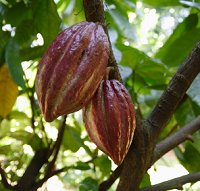 Cacao is believed to have originated in South America. There is a lot of evidence suggesting that the ancient Maya in Central America were the first to domesticate Theobroma cacao as a crop.
The Aztecs ground cacao into Xocoatl, a chocolate drink used mostly for spiritual and ceremonial rituals.
Hernan Cortés is credited with bringing cacao to Spain where it spread throughout Europe in the 1500’s and 1600’s.
Read more
Chocolate and Beer Pairing – Belgian Ales
July 25, 2010
In the opening post of this series I mentioned that there are three categories of beer that pair well with chocolates.
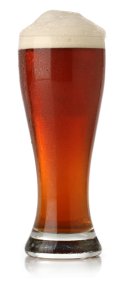 A second group of beers are the Belgian-style ales...
These beers are typically amber to brown in color, with high alcohol content (often greater than 8%) and are usually quite fruity in their aroma. Candy sugar (like a hard rock candy) may be added to the barley malt to increase the alcohol level without darkening the color or making it too malty.
Read more