
Chocolate University Online Blog
Yep, chocolate and beer pairing is getting so popular I might as well share a recipe that has it.
It may sound bizarre to others who don’t experiment with food much, but beer and chocolate go together splendidly, especially the dark variants. The pairing sounds pretty strange but boy does it work!
People who aren’t crazy about beer often have a fancy for chocolate, so it’s safe to say it’s a win-win recipe. Huge beer fanatics can find flavors in beer that can also be found in chocolate.
With some experimentation, foodies now have come up with something that would make beer fans and chocolate lovers meet halfway. Those who have a sweet tooth are the ones who will enjoy it better, though!
Chocolate Beer Pudding Cake
Batter:
• 1 1/2 cups all-purpose flour
• 3/4 cup sugar
• 1 tablespoon unsweetened cocoa
• 1 1/2 teaspoons baking powder
• 1/2 teaspoon baking soda
• 1/4 teaspoon salt
• 3/4 cup beer
• 1/3 cup oil
• 1 egg, slightly beaten
Syrup:
• 1 tablespoon unsweetened cocoa
• 3/4 cup beer
• 1/3 cup brown sugar, packed
• 1/3 cup sugar
For batter, mix dry ingredients; make a well in center. Add beer, oil and egg to the well. Beat just until smooth. For syrup, make a paste of cocoa and a little beer. Add remaining beer and sugars. Heat to boiling. Pour batter into a greased 8-inch square baking pan. Drizzle syrup over top. Bake at 350° for 40 minutes. Cool about 5 minutes, loosen sides of cake from pan; invert onto platter. Even out pudding layer with knife. Serve warm or cool. |
Enjoy!
Categories: chocolate recipes
Tags: baking chocolate, beer, cake, chocolate dessert, chocolate pairings, food pairings, pudding, snacking
Detroit’s darling candy maker, Sanders Candy, has been around for 136 years already. They are known for their delectable treats namely chocolates, cakes, ice cream, among others. Now, they have ventured into adult treats and partnered with another Detroit classic, Detroit Brewing Co., to come up with a refreshingly unique beer, Sanders Chocolate Stout.
Sanders is reportedly arranging for a huge introduction of this 1-year-old Chocolate Stout into the market later this month and is also planning to make a chocolate-based dessert wine.
“Craft beers are becoming more popular as consumers look for local, authentic, handcrafted foods and beverages with passionate food artisans and entrepreneurs behind them,” said a spokesperson for the National Association for the Specialty Food Trade, Louise Kramer. Additionally, “chocolate is hugely popular with consumers of specialty foods.” True enough, chocolate was named as 2011’s top specialty food.
Sanders Chocolate Stout is combination of Sanders premium chocolates and Detroit Brewing Co.’s Pub Classic Smooth Cream Stout. The fine Stout Ale has a dark and pleasing aroma matched with the chocolatey yet not overwhelming flavor coming from hand-picked cocoa.
“We were skeptical at first,” said Brian Jefferson, the chairman of the group that owns Sanders, in regards to the brewer’s proposal to team up. “We weren’t going to make a decision until we tasted it. We weren’t selling our brand just to sell our brand and put a few pennies in our pocket. It had to be really good.”
6,000 cases were quickly sold out last year so Sanders is producing at least six times as many cases this year. The Chocolate Stout won’t be sold in Sanders stores, though, since they don’t have liquor license. They will be retailed by merchants–Hiller’s Markets, Meijer, Whole Foods, Nino Salvaggio, Hollywood Markets, and Holiday Market.
It may not tickle a little kid’s fancy that much, but the kid inside an adult beer drinker will surely have a reason to down more bottles. However, moderate drinking is still recommended.
Categories: chocolate in the news, fine foods & beverages
Tags: beer, chocolate companies, chocolate drinks, chocolate novelties
As you may have read in the earlier blog posts, one of the things that makes a chocolate and beer tasting great is the fact that it is unusual, yet it works! Even people who say they don’t like beer, often do like chocolate so everyone can enjoy the event.
Last week’s Craft:Beer+Food event was a huge hit, the pairings were sublime. If you weren’t able to attend, fret not, as a sequel to this delightful affair is anticipated. After Craft:Beer+Food comes the next big thing, BitterSweet:Beer+Chocolate. It is a non-profit happening that enables local breweries to showcase their beers along with the remarkable chocolates of Seattle’s own Theo Chocolate.
BitterSweet:Beer+Chocolate presents the connection between craft beer and artisan chocolate. This event showcases beer paired with chocolate and even beer made with chocolate. Sound interesting, eh? Eight of the Seattle area’s most renowned brewers are taking part in BitterSweet. As expected, they will be providing beer from their regular listings coupled with products from Theo Chocolate, which will be collaborating with them. In addition, they will also be producing new beers just for this event.
Chocolate makers and confectioners from Theo are the ones held responsible for the pairings. For those who haven’t tried this before, head to Theo Chocolate in Fremont and taste the marvelous list of products that they are offering. Their mouthwatering goods are worth your time and effort!
There was a different vibe when the team of brewers was introduced to their counterparts at Theo Chocolate, a good vibe, specifically. Amazingly, they speak the same language and share the same passion for their craft. With the use of chocolate from Theo and byproducts from the chocolate-making process, the brewers plan on making innovative, fresh, and original world-class beers.
Save the date as doing anything else will only make you, as the cliché goes, miss half of your life. Get to experience it and walk away amazed.
BitterSweet: Beer+Chocolate
Seattle, WA
Thursday, November 10, 2011
Categories: chocolate in the news, chocolate pairings, fine foods & beverages
Tags: beer, bittersweet chocolate, chocolate celebrations, chocolate pairings, Chocolates, food pairings, Theo Chocolate
Over the last couple of centuries, the cacao bean been has been used in many different ways such as medicine, as money, etc. But today, we eat it almost exclusively for pleasure.
There are different varieties of cacao beans and it has been said that each strain has been significantly changed due to its tree’s ability to naturally cross-pollinate, not to mention all the intended hybridization of the cacao bean for the past centuries.
Cacao beans go through a lot of processing to produce the chocolate we all love. They are harvested, fermented, dried, roasted, and ground to make chocolate liquor, which is then further processed into cocoa solids and cocoa butter.
Chocolatiers or the chocolate makers use these cacao beans or the cocoa mass to produce pure chocolate, which they call “couverture”. This is what they make their confections from.
To make the chocolate, the chocolate liquor is incorporated into cocoa butter and sugar. And these chocolates are categorized based on the amount of the chocolate liquor that was put into it.
The categories said are the following: Dark chocolate, which is known for its bittersweet taste, contains the highest quantity of chocolate liquor. Milk chocolates, which are made with milk ingredients, contain less chocolate liquor. While white chocolate, which is technically not real chocolate since cocoa solid content is zero, is made from cocoa butter, sugar and milk.
A few years back, Scharffen Berger started the style listing the percentage of cocoa mass on labels so people would determine how dark is dark. And within each category, characteristics are all laid down such as the type of cacao beans used, the maker and chocolatier, etc.
Chocolate and wine are known to be a perfect combination. Dark chocolates typically go well with stronger fruity red wines. Milk and white chocolates are often best with white and rosé wines. Just see to it that the chocolate is not as sweet as the wine.
Ports (sweet dark red dessert wine) are also known to be a good partner of chocolate. Tawny ports are preferred over vintage ones as the latter overwhelms the chocolate rather than complementing it.
Beer and chocolate can go superbly together as well. Think of any beer and pair it with practically any chocolate, keeping in mind that the darker the chocolate is, the better.
You can search this blog for more specific pairings of wine and chocolate as well as beer and chocolate.
Categories: chocolate education, chocolate pairings
Tags: beer, chocolate liqueur, chocolate liquor, chocolate pairings, Scharffen Berger, wine
Chocolate pairs well a lot of things, and Stout Beer is apparently one of them.
According to the Fourth Annual Chocolate Adventure Contest® winner, chocolate and stout beer make a $10,000 cupcake.
Contest rules state that participants must create an original cupcake recipe using both Scharffen Berger chocolate and one or more “adventure ingredients.”
A list of adventure ingredients is presented each year to complement the Scharffen Berger chocolate blends. Here is a sample of some of the adventure ingredients:
• Adzuki bean
• Almond flour
• Bee pollen
• Beet (fresh)
• Buttermilk
• Coconut butter, cream or milk
• Fresh or whole dried chili pepper
• Meyer lemon
• Molasses (light, dark or blackstrap)
• Ricotta
• Saffron
• Stout Beer (any variety)
• Sumatra coffee bean
• Sweetened condensed milk
The $10,000 Prize went to “You Make Me Want To Stout” by Elaine Barbee from Missouri. She made a rich chocolate cupcake using only the stout as her adventure ingredient. Her recipe was chosen as the winner over 2,000 other entries.
Cupcakes were judged on creativity, spirit of adventure, ease of preparation, appearance and flavor.
The reason stout makes a winning combination with chocolate is that it adds depth of flavor without overwhelming it.
My mouth is already watering for the 1st place cupcake but check out the descriptions of second and third place. First, grab a napkin to catch all the drool.
Second place cupcake: “Spicy Dulce de Leche and Chocolate Cream Stout Cupcakes with Chile Ganache and Candied Serrano Chiles.”
Third place: “Beer Bellies, a Cocoa-Stout Cupcake with Beer-Malt Frosting and Spicy Pretzel Crumbles.”
Yum!
Categories: chocolate in the news
Tags: beer, cupcakes, Scharffen Berger
Hey, let’s talk about beer again. A few months ago we had a guest author blog about chocolate AND beer. This time we’ll talk about chocolate IN beer!
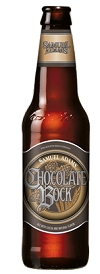
Many chocolate beer makers will use a type of malted barley called chocolate malt. Chocolate malt is similar to other malts but cooked at even higher temperatures. This dark roast produces a more complex flavor with undertones of vanilla and caramel. The color also becomes dark.
This year, the Samuel Adams® beer company introduces Chocolate Bock made with actual cacao!
They slowly aged the beer over a bed of roasted Ecuadoran cocoa nibs to capture flavors that include chocolaty, fruity, nutty, and earthy – flavors that are typical of an Ecuadoran origin bean.
The Chocolate Bock is advertised as “smooth, rich, and dark, with the robust flavor and creamy texture of chocolate.”
According to their website, http://www.samueladams.com/, Chocolate Bock would taste real good with a plate of braised short ribs.
Ok. I’m in.
Categories: chocolate in the news
Tags: beer, chocolate drinks, Ecuadorian chocolate, nibs
In the opening post of this series I mentioned that there are three categories of beer that pair well with chocolates.
The third group of beers include pale, bitter beers, such as India Pale Ales. These also tend to do well when paired with chocolate…
India Pale Ale was created in the 1820’s for the voyages between England and India. The three month voyage would have to cross the equator twice. So not only was the journey long, but it was also quite warm. Since time and high temperatures are bad for beer preservation, typical beers sent to India arrived in very poor condition.
The Pale Ales however were brewed to last up to a couple years. First, the beers are higher in alcohol, a natural preservative. The higher the alcohol content, the longer beer will survive. So the beer is made with a lot of barley malt so the increased starches become sugars and then ferment into alcohol.
Second, more hops are used. Hops, the flowering cone on the hop plant, are also a natural preservative. They make the beer bitter and impart a floral aroma. The more hops you use, the longer the beer will survive, but it will also become more bitter.
With these two factors combined, the beer could better survive the long, warm voyages. Strong, malty, alcoholic and bitter are ways to describe this style. Such beers tend to pair well with malt-flavor truffles, gourmet malt balls, and even a variety of chocolate and nut combinations. The malty flavors pair well together even though the bitterness of the beer and sweetness of the malt are opposites. This creates a contrast that works quite nice.
Pairing chocolate and beer is easier than pairing chocolate and wine, and the outcomes of the pairings are more predictable with beer than they are with wine. Try it for yourself!
Sue Langstaff, a member of the Primal Chocolate Club, has contributed this series about chocolate and beer pairing. Her company Applied Sensory, LLC offers analytical sensory services for the wine, brewing, and food industries.
Categories: chocolate education, chocolate pairings
Tags: beer, chocolate lessons, tasting
In the opening post of this series I mentioned that there are three categories of beer that pair well with chocolates.
A second group of beers are the Belgian-style ales…
These beers are typically amber to brown in color, with high alcohol content (often greater than 8%) and are usually quite fruity in their aroma. Candy sugar (like a hard rock candy) may be added to the barley malt to increase the alcohol level without darkening the color or making it too malty.
The beer style is flavorful, yet smooth. The yeast used in these Belgian-style ales has a lot of underlying fruit tones, especially among the Trappist-style dubbels (doubles). As a result you might notice caramel, layers of banana, apple, apricot and peach, with cinnamon, nutmeg, or clove spices.
Fruit-flavored Belgian Lambic beers pair well with 60%+ cacao dark chocolate. The tartness of these fruity beers pairs nicely with the not-too-bitter dark chocolate. For an extra wow factor, combine any berry-flavored truffle or chocolate bar with dried berries and amber ale.
Amber ales are made from barley malt that, in some cases, is called “caramel malt.” This malt doesn’t really taste like caramel, but it does have an inherent sweetness and can give a nutty flavor.
Sue Langstaff, a member of the Primal Chocolate Club, has contributed this series about chocolate and beer pairing. Her company Applied Sensory, LLC offers analytical sensory services for the wine, brewing, and food industries.
Categories: chocolate education, chocolate pairings
Tags: beer, chocolate lessons, tasting
In the opening post of this series I mentioned that there are three categories of beer that pair well with chocolates.
The first group for pairing includes dark beers such as porters and stouts…
These beers are made using a good deal of roasted or burnt barley malt. In fact, one of the burnt barley malts is even called “chocolate malt.” It doesn’t really have any chocolate in it, but rather the malt has been roasted or kilned until it acquires more of a chocolaty color.
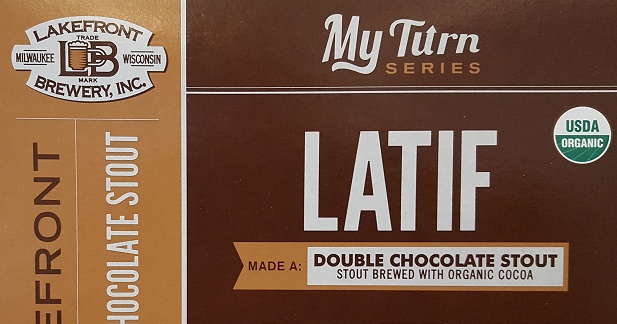
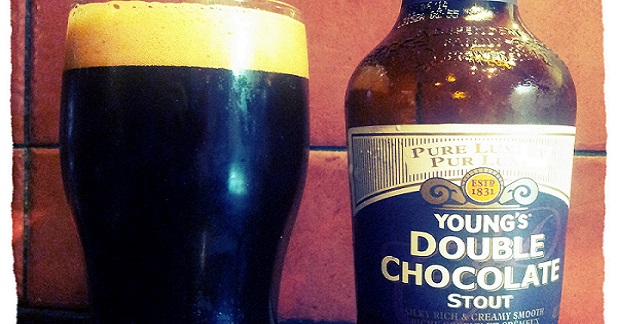
“Chocolate stout” is a name brewers will sometimes give to certain stouts that have a noticeable dark chocolate flavor through the use of chocolate malt. In some cases, to give a real chocolate flavor, the beers are brewed with a small amount of actual chocolate; this can impart a powdered cocoa flavor or a creamy, dark, bittersweet chocolate flavor.
Brewers will also use a good deal of pale malt and some caramel malt in making porters and stouts. These beers provide roasted, toasted, caramel and coffee-like flavors that match well with any chocolate, especially a caramel truffle, a chocolate turtle with caramel and nuts, or a caramel-infused dark milk chocolate bar.
Strong stouts, especially Imperial stouts, can provide perfect matches to chocolate desserts. Classic dry Irish stouts such as Guinness are not a good match because they don’t have the proper intensity. Another stout that doesn’t work well is a Cream Stout. It’s simply too sweet due to the addition of lactose, causing a conflict with the sweetness of the dessert. Instead, you should find a beer that offers a little break from the sweetness of the dessert.
Sue Langstaff, a member of the Primal Chocolate Club, has contributed this series about chocolate and beer pairing. Her company Applied Sensory, LLC offers analytical sensory services for the wine, brewing, and food industries.
Categories: chocolate education, chocolate pairings
Tags: beer, chocolate lessons, tasting
When most people think about pairing chocolate with an alcoholic beverage the product they usually consider is wine. However, there are components in wine which can make these pairings difficult and often unpredictable.
Tannins in red wine can make dark chocolates seem more bitter, and the acidity in wines often does not balance well with the chocolate. Because of the variation in wine styles, even within varietals, it’s often difficult to generalize about ideal wine and chocolate pairings.
This is not the case for beer!
Beer is every bit as complex as wine, perhaps more so. There are more than 60 recognized styles of beer. Styles of beer include stout, porter, India pale ale, bock, Oktoberfest, amber ale, lager, and many more.
While each style is unique, most brewers create beers within the style guidelines for that beer type. Beers within a style are recognizable cousins of each other, unlike wines within a wine varietal.
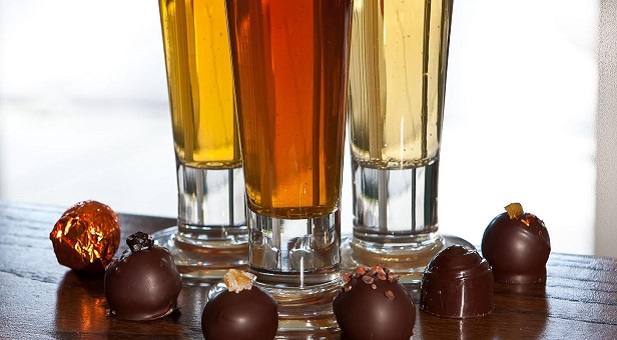
One of the things that makes a chocolate and beer tasting great is the fact that it is unusual, yet it works! Even people who say they don’t like beer, often do like chocolate so everyone can enjoy the event. Serious beer aficionados can find toasty, caramel, toffee, roasted, chocolate, coffee and fruity notes in beer. All these same notes can be found in chocolate.
Through years of experimentation, beer drinkers have discovered that a number of different beer styles can pair well with the unique flavors in, and sweetness of, chocolate.
Three general categories of beers usually do well when paired with a range of chocolate selections. We’ll take a look at each of these categories in upcoming posts.
Sue Langstaff, a member of the Primal Chocolate Club, has contributed this series about chocolate and beer pairing. Her company Applied Sensory, LLC offers analytical sensory services for the wine, brewing, and food industries.
Categories: chocolate education, chocolate pairings
Tags: beer, chocolate lessons, tasting
|