
Chocolate University Online

"the chocolate destination...where learning and heaven unite"

CUO homeChocolate ClassesChocolate University Online StoreChocolate BlogChocolate InformationAbout CUOContact CUO
 

Subscribe to RSS Chocolate University Online Blog

brynPeanut Butter and Chocolate

By Bryn Kirk on August 14, 2010 | Comments (0)

You can probably guess what PB&J means.  Peanut Butter and Jelly.  PB&J is a classic American combination mostly reminiscent of childhood.  Now that you are grown up, I suggest you switch to a more sophisticated flavor combination – Peanut Butter and Chocolate.  Can we call it PB&C?

The most accepted theory of who put peanut butter and chocolate together is the story of H.B. Reese.  Mr. Reese started out as a dairy employee for Hershey Chocolate Company in the 1920’s.   He soon ventured out to start his own company and began to manufacture a single product called peanut butter cups, known today as REESE’S Peanut Butter Cups.

The variety and popularity of recipes that are made with the peanut butter and chocolate combination are numerous.  You can find the pairing in granola, ice cream, cake, brownies, chocolate truffles, melt-a-ways, candy bars, cookies, pie, fudge, and mousse.  Whew – I am certain I missed something.

Here is a great recipe recommended by many who enjoy the chocolate and peanut butter combination for breakfast…

Peanut Butter Chocolate Chip Muffins
 
2/3 cup peanut butter, chunky or smooth
2 tablespoons butter, melted
3/4 cup sugar
2 eggs
1 1/2 teaspoons vanilla
1 1/2 cups flour
1 1/2 teaspoons baking powder
1/2 teaspoons baking soda
1/2 cup milk
1 cup semi-sweet chocolate chips
 
Preheat oven to 350°. In a large mixing bowl, combine peanut butter and melted butter; stir until well blended. Mix in sugar, eggs, and vanilla. Combine flour with baking powder and baking soda. Add to peanut butter mixture along with milk and chocolate chips. Stir just until combined.
 
Spoon batter into 12 paper-lined muffin tins. Bake 20 to 25 minutes, or until muffins spring back when lightly touched in center. Serve warm or at room temperature.

Categories: chocolate recipes,fun chocolate facts
Tags: ,

brynHot Fudge Sauce

By Bryn Kirk on July 31, 2010 | Comments (0)

Summer time is ice cream time – with hot fudge sauce of course!

Wow – it seems there are about as many different recipes for hot fudge sauce as there are types of ice cream to put them on.

From what I can tell (after reviewing many recipes) hot fudge sauce is different from ordinary chocolate sauce in that it’s really a chocolate fudge that never sets.  Cream or milk, sugar, and butter are boiled until thickened so that it gets nice and gooey. 

I wonder if the first hot fudge sauce was simply a fudge failure? 

Fudge making appeared on the scene in American history in the late 19th century.   At some point, people began to deliberately make under-cooked fudge and serve it warm over ice cream. 

Here are two hot fudge sauce recipes for your eating pleasure.  Enjoy!

Hot Fudge Sauce
 
1/4 cup  butter
3 cups  sugar
2 squares  unsweetened chocolate
1/2 tsp  salt
1 can  evaporated milk
 
Melt butter and chocolate, then add sugar and salt. Slowly add milk and bring to a rolling boil until thickened.  Serve warm over vanilla ice cream.
  
Microwave Hot Fudge Sauce
 
1 cup  sugar
3 tbsp  cocoa
1 stick  butter
1/2 cup  milk
 
Mix sugar and cocoa and milk.  Stir. Bring to a boil in the microwave. Add butter and continue to boil until butter is completely melted.  Serve warm over ice cream. 

Categories: chocolate recipes
Tags: , , ,

brynThe Spread of Cacao Around the World

By Bryn Kirk on July 29, 2010 | Comments (0)

I was recently asked about the spread of Cocoa or Cacao trees around the world.

Cacao is believed to have originated in South America.  There is a lot of evidence suggesting that the ancient Maya in Central America were the first to domesticate Theobroma cacao as a crop.

The Aztecs ground cacao into Xocoatl, a chocolate drink used mostly for spiritual and ceremonial rituals.

Hernan Cortés is credited with bringing cacao to Spain where it spread throughout Europe in the 1500’s and 1600’s.

Spanish friars began to grow cacao in Ecuador around 1635.  The French introduced cacao to Martinique and St Lucia, the Dominican Republic, and Brazil in the mid to late 1600’s.   England started growing it in Jamaica and the Dutch in Curaçao.  All of this effort just to meet the ever growing demand for the affluent in Europe.

When demand exploded again in the 1800’s even more had to be cultivated.  Cacao from Brazil was taken to Principe and Sao Tomé, islands off the coast of West Africa around 1830.  From there, it spread to Nigeria and Ghana.

Today, the largest cacao producing country is Ivory Coast, Africa.

Categories: chocolate education,fun chocolate facts
Tags: , , ,

brynS’mores

By Bryn Kirk on July 5, 2010 | Comments (1)

A S’more is considered a summer time classic by many.  It brings back memories of camping and backyard barbeques.  And, of course, it just tastes good.

If you are not familiar with s’mores, it is like a marshmallow and chocolate sandwich with the bread replaced with graham crackers.  First roast a marshmallow skewered on the end of a long stick or fork over the coals of a camp fire or grill. 

Meanwhile put a piece of chocolate on a graham cracker.  After the marshmallow turns a golden brown, you pull it off the stick, place it on top of the chocolate, and top with another graham cracker.  The warm marshmallow melts the chocolate and voilà! a s’more is born.

No one is certain when or who invented the s’more.  The accepted idea is that the Girl Scouts made “Some Mores” at Girl Scout Camp back in the 1920’s.

Here’s my theory:  someone forgot it was a bad idea taking candy bars camping during the summer heat and the whole lot melted before dessert time.  Because the dim-witted person was also frugal, there was a strong need not to waste the chocolate.

This is how chocolate and I get along in the heat…  If I purchase a gift of chocolate from my favorite chocolate shop during summer, I go into game show contestant mode.  The game is called “Get Home Before It Melts.”

If I succeed, I declare myself the winner and treat myself to some chocolate (go figure! :) ).   There is strategy involved.  I have to pick the most efficient route home, and I must place the chocolate directly under the AC vent on the floor of my car with it blowing full blast.  I yell at all the drivers to get out of my way as I precariously drive the line between speeding and simply going slightly over the limit.

Back to s’mores.  The real reason I bring this up today is because of an article I read from Global Exchange.  They remind us to use fair trade chocolate when making our s’mores this summer.  No, sad to say, Hershey is not fair trade, so what this really means is that you might have to step out of your flavor comfort zone and explore a new taste while supporting the fair trade initiative.

To learn more about their project, visit this website: www.globalexchange.org/smoresaction.

Categories: chocolate education,chocolate in the news
Tags: , , ,

brynChocolate and Romance: A Great Pairing

By Bryn Kirk on February 8, 2010 | Comments (1)

No one knows for sure how St. Valentines Day became synonymous with romantic love. There are a number of theories, but that is not really important.  Once the tradition got started, all kinds of things naturally presented themselves as part of the language of love…

Like chocolate, for instance.

Chocolate and romance go together. 

Throughout history, people have believed chocolate to be an aphrodisiac.  It is said that Montezuma drank chocolate to increase his amorous energy and stamina. From ancient Mexico to Europe and then to America, this legend spread across the globe and survived the centuries as a powerful love potion.

Chocolate is a complex food and scientists try to unlock its secrets. When eaten, it changes human behavior, especially in women. Chocolate contains two substances called Phenylethylamine and Seratonin.  These are responsible for lifting one’s mood and making us experience feelings of well being, love and happiness.

When Phenylethylamine and Seratonin are released into the body, they can produce arousing effects and give us instant energy.  No wonder chocolate has gained a reputation as an aphrodisiac. Women are more susceptible to the effects of Phenylethylamine and Seratonin than men.

Still, the debate continues as to whether or not there is scientific evidence proving chocolate as an aphrodisiac.  Sure, there are chemicals in chocolate that makes us “feel good” but so does the act of eating the chocolate because it TASTES good.  And I, for one, feel good when I receive chocolate as a gift.  It gives me feelings of being loved.

There is no doubt about one thing – chocolate and romance do go together.

Enjoy some chocolate this Valentines Day!

Reblog this post [with Zemanta]

Categories: chocolate education,fun chocolate facts
Tags: , ,

cuoadminChocolate and Cocoa Recipes

By Jeffrey Kirk on January 9, 2010 | Comments (0)

Back in 1909 Walter Baker & Co., Ltd. published a little book called Chocolate and Cocoa Recipes By Miss Parloa and Home Made Candy Recipes By Mrs. Janet McKenzie Hill.

The staff here at Chocolate University Online have created a special 100th anniversary edition of this book and released it in a PDF download format.

In addition to the original text and 138 recipes, the book contains an all new introduction by CUO staff.  We also took each of the pictures and moved them to the same page as their corresponding recipes.  It’s much more convenient to see the picture right there rather than looking at various photo pages to get an idea of the finished product.

Furthermore, we added a great new alphabetical index.  Now if you know the name of the recipe you’ll be able to find it quickly.  That makes the book much friendlier than the original which, quite uselessly, listed all recipes in page number order.

The new version is for sale and immediate download at our Chocolate Store page.  Enjoy!

Categories: chocolate recipes,fun chocolate facts,shameless self promotion
Tags: , , , , ,

brynWho Invented Chocolate?

By Bryn Kirk on December 19, 2009 | Comments (0)

In my opinion, everyone involved in the early evolution of cacao plant into an edible substance we call chocolate should receive a “get into heaven free” card regardless of their religious beliefs!

While there is no one particular person who invented chocolate, most experts believe the ancient Maya discovered the delicious secrets of chocolate between 250-900 A.D.

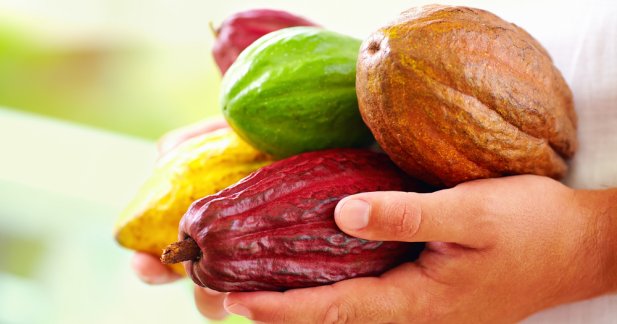
cacao pods

They learned how to harvest cacao (the fruit/pod of the Cacao tree), then ferment, roast, and grind the seeds found within.  The Maya used liquid chocolate in their religious and social lives.  The seeds (cocoa beans) were considered to be very valuable and were often used as currency.

Ancient chocolate was very different from the chocolate we know today.  The ground cacao seeds were mixed with water, chili peppers, cornmeal, and spices to form a paste.  Then they used the paste to make a frothy, spicy chocolate drink.  The drink was unsweetened.

Chocolate was first brought to Europe by Christopher Columbus and Hernan Cortez.

Christopher Columbus is believed to be the first to bring cacao seeds to Europe when he returned from his fourth voyage to the new world (landed on the island of Guanaja off the coast of Honduras) in 1502.

In 1519 Cortéz reached Mexico City and was received by Montezuma, the Aztec emperor.  Cortéz recognized the value of the cacao bean, he drank the chocolate, and learned its formula.

When he returned to Spain he presented the beans as a gift to King Charles V. He also brought back the knowledge of how to make the chocolate beverage. Later, monasteries were designated as storehouses of the beans, and monks were charged with making the chocolate drink.

It is believed that the Aztecs drank their chocolate cold.  In Spain in the 1500’s, purveyors of the drink served it hot.

Around 1830, a solid form of chocolate was developed by a British chocolate maker named Joseph Fry.  He called it “eating chocolate.”  In 1847, the Fry’s chocolate factory molded the first ever chocolate bar that was suitable for widespread consumption. 

Thus it was the Fry family who first brought chocolate to the masses in a form most recognizable today (though having had today’s chocolates you probably wouldn’t like their earlier version).  Others have since refined their processes and formulas to give us the variety of wonderful options we have now.

Categories: chocolate education,fun chocolate facts
Tags: , , ,

brynChocolate as a Cure For Everything

By Bryn Kirk on November 3, 2009 | Comments (2)

Before modern science began discovering the much talked about health benefits of chocolate, the Mayans (central America) and Aztecs (ancient Mexico) considered it a powerful remedy to many ailments.

Theobroma cacao, or the “chocolate tree,” has been used in folk medicine as an anticeptic, diurectic, and parasiticide.  It has been used to heal burns, cough, dry lips, fever, listlessness, malaria, nephrosis, rheumatism, snakebites, and small wounds.

The cacao tree was thought by the Aztecs to be a gift from their god Quetzalcoatl, which means “feathered serpent.”  The Aztecs would drink ground cacao in religious ceremonies to thank the gods for their generosity.  The drink was said to give feelings of euphoria and stamina.

When cacao beans were introduced to Europe, the stimulant effects (now known to be caffeine and theobromine) gave it the reputation as an aphrodisiac.  Europeans drank cacao more as a love potion than religious offering.

In Mayan times, incense consisting of cacao beans would be burned as an offering to the gods for safe travel and speedy return.

In ancient America, cacao was also used to try to cure malaria and other types of fever diseases by inhaling the smoke during healing rituals. 

Today, we hear chocolate is rich in “flavanoids,” “anti-oxidants,” and phenylethylamine (PEA).  The science and benefits seem to change over the years, but chocolate has always been seen as good for us.

Categories: chocolate education
Tags: , , , ,

brynHaving Fun with Antique Chocolate Molds

By Bryn Kirk on August 21, 2009 | Comments (1)

I love collecting things and I love all things chocolate.  It seemed natural to put the two passions together.  Now I enjoy collecting chocolate making tools and other items related to chocolate history and chocolate making.

Antique chocolate molds (or moulds) from the 19th- and early-20th-century are quite collectible.

Candy makers of yesteryear used coated-tin chocolate molds to create whimsical chocolate shapes.  You may have fond childhood memories of chocolate bunnies and Santas at holiday time.  These were the most abundantly made designs.  Tin and tin-coated metal chocolate molds can still be readily found these days.

In 1870, the German manufacturer Anton Reiche was considered the master mold maker of the time.  He produced more than 50,000 designs, for every occasion you can imagine.

As with many antique items, the fair market value is based on size, condition, and age.  Prices can start as low as $10 for a small Easter egg mold and go up to about $3,000 for a 20-inch-tall rabbit.

I always keep my eyes open for these treasures at garage sales and antique stores or auctions.  If I am in serious mood, I look online.  You can find wonderful deals when you set your mind to it.

The thing I like best about my chocolate molds collection is that I can USE them, not just display them.

There are different kinds of molds out there:

  1. Double molds with opening, usually at the bottom.
  2. Double molds without opening, held together by clamps and clips.
  3. Folding molds.  These are double molds with hinges and locks.
  4. Flat molds, mostly of square or rectangular shapes to produce chocolate tablets or bars.

Once you have your mold with all its pieces, clean it thoroughly and let it dry completely.  Temper your favorite chocolate, pour it in, let it cool and pop it out!  OK, I made that sound too easy.  Truth is, there is some skill involved.  (I’d love to teach you.)  But now that you have your own mold, you can practice and practice.  I don’t see a downside:  just eat your mistakes!

Categories: fun chocolate facts
Tags: ,


Get Your FREE Ebook Now!

"101 Things You Must Know About Chocolate"

Name:
Email:

We will not share, rent, sell, or give away any information you ever provide us.  We will keep your email address secret.

Recent Posts

Sponsored Links

Tags

Categories

Archives

Interesting Links