
Chocolate University Online Blog
Every now and again you will come across an article, a chocolate bar, or a chocolate company that will draw attention to Bean To Bar processing.
Bean to bar means quite literally that the product was manufactured from the roasting and grinding of the bean to the tempering and packaging of the chocolate.
What’s so special about claiming to be bean to bar?
Many chocolates are made by purchasing already made chocolate couvertures that get melted down and used for coating or molding into truffles, pralines, or chocolate bars. While there is certainly nothing wrong with buying pre-made chocolate, there are advantages to controlling each step of the process.
Bean selection is critical from a quality standpoint. Cocoa beans that are fermented properly will contain the best flavors to come out during roasting. Creating proprietary bean blends will provide a distinct flavor for the companies’ products.
Roasting beans in-house will ensure a consistent signature flavor profile, and mixing and refining to formula specifications will make smooth, sophisticated chocolates.
Boasting a bean to bar product is something not all chocolate makers can claim. These companies have the strong belief that the quality of their chocolate is the best it can be when they control the entire process from bean to finished product.
You be the judge. Here is a small list of bean to bar chocolate companies to get you started on your tasting journey.
Valrhona
Hachez
Amedei
Cadbury
Nestle
Lindt
Scharffen Berger
Divine
Equal Exchange
Green & Black’s
Categories: chocolate education
Tags: chocolate bars, chocolate lessons, chocolate manufacturing, cocoa beans
I am hard pressed to think of a box of chocolates that claims to be everything to everyone, but I may have hit the jack pot with Green and Black’s Miniature Bar Collection.

The collection contains milk chocolate, dark chocolate, almonds, butterscotch candy bits, crystallized ginger, dried sour cherries. Everything’s organic. The tasting samples are the perfect size. Also suitable for vegetarians. Did I miss anything?
This collection of Green and Black’s miniature bars come in six varieties;
Organic Dark 70% Chocolate, Organic Dark Ginger Chocolate, Organic Dark Cherry Chocolate, Organic Milk Chocolate, Organic Milk Butterscotch Chocolate, and Organic Milk Almond Chocolate.
The collection offers a range of intensely flavored chocolate bars. G&B does a superb job of keeping the strongest flavors like ginger and butterscotch from overpowering the chocolate. The chocolate coexists perfectly with each ingredient and was the last flavor to leave the mouth. I did enjoy them all, but two stand out as my favorites; the Almond Milk and the Dark Cherry.
Looking at the now empty package (12 lonely spaces) I realize that maybe I should have shared these with my friends and family… Nah.
Categories: chocolate review
Tags: candy bars, chocolate bars, dark chocolate, milk chocolate
In Devon England, Willie’s World Class Chocolate makes their chocolate the old fashioned way – the one hundred year-old way.
According to their website, www.williescacao.com, the equipment used to make their chocolate bars are antiques from the early 1900’s.
Each package of their Delectable bars claims that antique machinery brings out the subtle and unique flavors of cocoa beans better than modern equipment which is designed to be fast and efficient.
To find out if the age of a roaster really makes a discernable difference, I bought two of Willie’s chocolate bars.
First I tasted the 69% Java Dark Chocolate. I enjoyed the soft caramel notes and delicate chocolate impact. Unfortunately, the chocolate was course which diminished my enjoyment a bit.
Next, the Peruvian San Martin 70% Dark Chocolate. It was very good, with fruity notes and a bold chocolate aftertaste.
At the end of day, I still don’t know if the antiques contributed all that much to the flavor development of the chocolates. Without making the same recipe twice, once with the antiques and once with modern equipment, there’s really no way to know for sure.
But it doesn’t really matter. Good chocolate rarely has to be questioned.
Categories: chocolate review
Tags: candy bars, chocolate bars, dark chocolate
I have friends who are often reluctant to spend 10 dollars or more for a 100 gram chocolate bar. I can understand that. They wonder if it is worth it.
Here’s the thing; in the chocolate world, you get what you pay for!
There is an obvious taste and quality difference between a $0.79 chocolate bar and one that costs $1.99. All my friends get that. Also, there is a significant distinction between one priced at $1.99 and one for $7.99. Most of my friends get that. Where I lose almost all of them is anything above the magic $8 mark. Are the flavor differences that occur in this price range really worth the extra dough, they ask?
I say yes, but they remain skeptical. Well, if they want proof, I think I found it.
La Maison du Chocolat
Prices: $10.00 – $12.00
I have not had the pleasure of tasting all that La Maison du Chocolat has to offer, but the Akosombo Bar is wonderful. Akosombo is 68% dark Ghana (Africa) chocolate with intense, robust chocolate notes, hints of roasted coffee, and a smooth, subtle tobacco finish.
The chocolate artists from La Maison du Chocolat believe in blending different varieties and origins of cocoa beans to create well balanced flavor profiles.
On their website they explain what matters most in flavor development: the provenance and the manner in which the beans have been roasted and then processed.
They go on to discuss that while a single origin chocolate will be of good general flavor and quality, a specific flavor profile can vary from one harvest to the next. This is why they prefer to precisely blend a variety of beans so the flavors can remain consistent from year to year.
I could not agree more! It is a science as well as an art to make an exceptional chocolate. It is clear that La Maison du Chocolat has perfected both.

Categories: chocolate review
Tags: chocolate bars, dark chocolate
Happy Earth Day!
Just in case you haven’t guessed the obvious… I enjoy eating chocolate, and I want chocolate to continue to be part of my world!
According to the International Cocoa Organization, 2.5 million farmers produce almost 90 percent of the world’s cocoa on about 5-10 acres. Most of the world’s cacao is grown on the small family owned farm. The best chocolate comes from shade grown cacao managed by farmers using small-scale, low-impact techniques.
There are still large, old style cocoa plantations in business. Cacao trees grow best in shade, but on a plantation they grow row upon row in full sun like an orchard. This practice results in the trees becoming stressed, more susceptible to disease and the soil more quickly depleted of nutrients. It is a large-scale, chemically intensive operation.
On this Earth Day, I am reminded to support the protection of our agricultural ecosystems as well as our fair trade economic system s.
I recently enjoyed a Divine Dark Chocolate 70%. Check out the Divine Dark Delights Gift Box at www.divinechocolateusa.com. Divine dark chocolate has a robust cocoa flavor with hints of fruit and earth and a smooth non-bitter aftertaste. That is heavenly!
Sweeter still was the warm fuzzy feeling I got from supporting the farmer-owned cooperative, Kuapa Kokoo, and their commitment to keeping chocolate around for a good long time.
Categories: chocolate education, chocolate review
Tags: cacao farms, chocolate bars, chocolate holidays
Green and Black’s Organic Chocolate. Have you seen these chocolate bars in the stores and pharmacies of your neighborhood? Green and Black’s is definitely all over London! G&B is an English chocolate company started in 1991. The founders “set out to bring to the masses the world’s first organic chocolate.” You can visit them at www.greenandblacks.com.
The Green and Black’s 70% Organic Dark Chocolate was the first on the scene. Since then, the product line has expanded to include more varieties of chocolate bars, baking chocolate, hot chocolate, and ice cream.
Yes – Ice Cream!
I just finished a bowl of Green and Black’s Organic Chocolate Ice Cream with bittersweet dark chocolate made with fresh cream. They do not use cocoa powder, they use real dark chocolate. The intense chocolate flavor notes come off at the beginning and last through out the entire mouthful.
There is a short melt in the mouth and that means the chocolate is quick to finish. I wish it wouldn’t. The texture is fluffy and light and perhaps that is what slightly disappoints me. The airiness of the chocolate makes the flavor dissipate too quickly. Overall the flavor is simply delicious and decadent, but over too fast.
I learned that the name Green and Black’s comes from the company’s commitment to both the tradition of great chocolate and the support of responsible farming, thus Green for the environment and Black (or almost black) for the rich color of chocolate.
If you can’t find the ice cream, indulge yourself with a Green and Black’s chocolate bar. You’ll be doing yourself and the planet a favor.
Categories: chocolate review
Tags: chocolate bars, dark chocolate, grocery product, ice cream, organic chocolate
The bright purple wrapper of Trader Joe’s Organic Super Dark Chocolate and the equally bright pink packaging of Trader Joe’s Swiss Milk Chocolate certainly catch the attention of shoppers lining up in the check out lane. But what really got MY attention were the claims on the label.
The organic, 73% super dark chocolate bar reads “this bar is not for the faint of heart.” The Swiss milk says “incomparable flavor!”
Hmmm. Sounds like challenges I can’t ignore!
In order to collect as much data as possible, I took the bars to the office and shared the tasting experience with my work mates.
In a unanimous outcome, 4 out of 4 agreed that the organic dark was DELICIOUS. I tasted a good percentage of Ecuadorian in the formula and since that is one my favorite flavor profiles I gave the thumbs up as well. This chocolate starts out with strong roasted cocoa and fruity notes and finishes with a small bitter kick. It leaves a lasting impression of overall smoothness and well-balanced character.
3 out of 4 voted the milk chocolate was GOOD but on the edge of being too intensely milky and creamy. It should taste milky and creamy because it has 23% milk solids. This is almost double the amount of milk that would be required to call it milk chocolate in the United States.
One person did not favor the lingering milky aftertaste stating that it left her with “unpleasant milk breath.”
I would have appreciated more toffee-like notes instead of milky notes. The longer a milk chocolate is cooked and mixed (a process called “conched”) the more caramel or toffee flavor comes out.
We enjoyed both chocolate bars but the 73% dark won the day. I guess we are not faint of heart afterall!
Categories: chocolate review
Tags: chocolate bars, dark chocolate, grocery product, milk chocolate, organic chocolate
I dislike grocery shopping. Yet, once in a while, I do have brief feelings of enjoyment when I discover something unexpected.
During my most recent trip to the store I found myself downright giddy. My thrill came from a new addition in the candy/chocolate aisle – a line of chocolate bars from Valrhona. It was like finding gemstones among rocks.
Valrhona is known as a top leader in the world of chocolate, Le Grand Chocolat. They were founded in 1922 in France. They have a reputation for supplying the finest chocolate ingredients to restaurants, bakeries, and chocolate shops.
Their retail chocolate bars are made exclusively from Grand Cru chocolates. Grand Cru, usually used in reference to wine, is a term in the chocolate industry which means the cacao beans come from specific plantations famous for their distinctive flavor characteristics.
The bar I especially enjoy is the Grand Cru Manjari with Orange. This chocolate originates in Madagascar and offers “a fresh, acidic, sharp bouquet with red fruit notes.” The natural terroir, another adopted wine term, of this chocolate (fruity and tangy notes) blends nicely with the “citrus sweetness of orange comfit.”
Yes, it does taste as good as it sounds! I bought mine for $4.49 at the nearby Pick ‘N Save grocery store. The price is twice as much compared to the surrounding chocolate bars, but a bargain in my eyes. This is top of line deliciousness!
Shopping for groceries may not be so bad after all. Next time I go, I will reward myself with a Grand Cru Caraïbe with hazelnuts!
Categories: chocolate review
Tags: chocolate bars, chocolate companies, favorite chocolate, flavors, grocery product
I recently taught a chocolate and wine tasting seminar. We tasted delicious, hand-made chocolates from local chocolate shops. Afterward, one of the attendees took me aside and made a confession…
She said I did a great job pointing out the reasons to fall in love with gourmet chocolate, but that sometimes she just wants a big handful of M&Ms. She wondered if something was wrong with her.
Perhaps there are many things wrong with her, but I don’t think craving M&M’s is one of them! A large part of enjoying chocolate involves memories of our early chocolate experiences. Children as young as age 9-11 start to prefer chocolate over other candy.
(Some of my early chocolate memories don’t involve Hershey bars or M&M’s so maybe that is why I don’t reach for them when I have a chocolate craving. My Dad introduced me to Marshall Field’s Frango™ Mints and Dark Chocolate Covered Orange Peel at an early age. Thank you, Dad!)
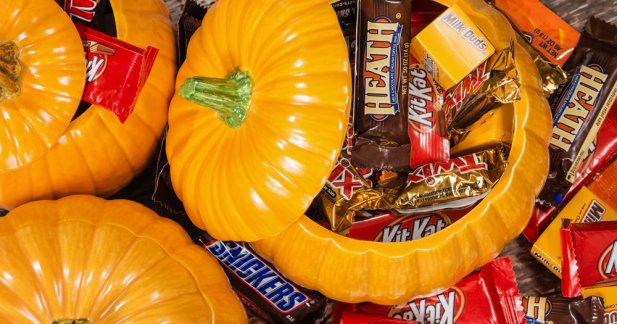
If you crave mass-produced candy bars you are not alone. The top ten most popular chocolate bars in the U.S. (based on sales in US Dollars) are:
1. Snickers
2. Reese’s Peanut Butter Cup
3. Kit Kat
4. Butterfinger
5. Milky Way
6. 3 Musketeers
7. Baby Ruth
8. M&Ms Plain Chocolate Candies
9. Oh Henry
10. Hershey Milk Chocolate Bar
Snickers tops the list with over 2 BILLION dollars in global annual sales!
Sometimes our past favorites are not made anymore. Do you remember any of these candy bars?
- Bar None
- Caravelle Bar
- Chocolate Babies
- Chocolate Cow
- Chocolite
- Forever Yours
- Rally Bar
- Marathon
- Mars Bar
- Milkshake Candy Bar
- Nestle Alpine White Bar
- PBMax Candy Bar
- Peanut Butter No Jelly Bar
- Seven-Up Bar
- Willie Wonka Oompas
I will always recommend you choose fine premium chocolate over the vending machine candy bar. But, if you need a trip down memory lane, I say go for it. And after you have satisfied that urge, promise me you’ll take a moment and enjoy a fresh chocolate truffle or a rich butter cream.
Categories: fun chocolate facts
Tags: candy bars, chocolate bars, favorite chocolate, grocery product, nostalgia
In my opinion, everyone involved in the early evolution of cacao plant into an edible substance we call chocolate should receive a “get into heaven free” card regardless of their religious beliefs!
While there is no one particular person who invented chocolate, most experts believe the ancient Maya discovered the delicious secrets of chocolate between 250-900 A.D.

They learned how to harvest cacao (the fruit/pod of the Cacao tree), then ferment, roast, and grind the seeds found within. The Maya used liquid chocolate in their religious and social lives. The seeds (cocoa beans) were considered to be very valuable and were often used as currency.
Ancient chocolate was very different from the chocolate we know today. The ground cacao seeds were mixed with water, chili peppers, cornmeal, and spices to form a paste. Then they used the paste to make a frothy, spicy chocolate drink. The drink was unsweetened.
Chocolate was first brought to Europe by Christopher Columbus and Hernan Cortez.
Christopher Columbus is believed to be the first to bring cacao seeds to Europe when he returned from his fourth voyage to the new world (landed on the island of Guanaja off the coast of Honduras) in 1502.
In 1519 Cortéz reached Mexico City and was received by Montezuma, the Aztec emperor. Cortéz recognized the value of the cacao bean, he drank the chocolate, and learned its formula.
When he returned to Spain he presented the beans as a gift to King Charles V. He also brought back the knowledge of how to make the chocolate beverage. Later, monasteries were designated as storehouses of the beans, and monks were charged with making the chocolate drink.
It is believed that the Aztecs drank their chocolate cold. In Spain in the 1500’s, purveyors of the drink served it hot.
Around 1830, a solid form of chocolate was developed by a British chocolate maker named Joseph Fry. He called it “eating chocolate.” In 1847, the Fry’s chocolate factory molded the first ever chocolate bar that was suitable for widespread consumption.
Thus it was the Fry family who first brought chocolate to the masses in a form most recognizable today (though having had today’s chocolates you probably wouldn’t like their earlier version). Others have since refined their processes and formulas to give us the variety of wonderful options we have now.
Categories: chocolate education, fun chocolate facts
Tags: cacao pods, chocolate bars, chocolate facts, chocolate history
Older Posts »
|